
Proposed rules would expand limits on Russian-language music, literature and cultural performances in public spaces, fueling debate over national identity and civil liberties during wartime
ODESA, Ukraine — Odesa, one of Ukraine’s largest cities and historically one of its most Russian-speaking, is considering new restrictions that could sharply reduce the public use of Russian in music, literature and cultural events.
The proposal, expected to be considered by city officials, would go beyond language restrictions already established under Ukrainian national law. It would target Russian-language cultural content in publicly controlled spaces while leaving private conversations and ordinary day-to-day use of Russian largely untouched.
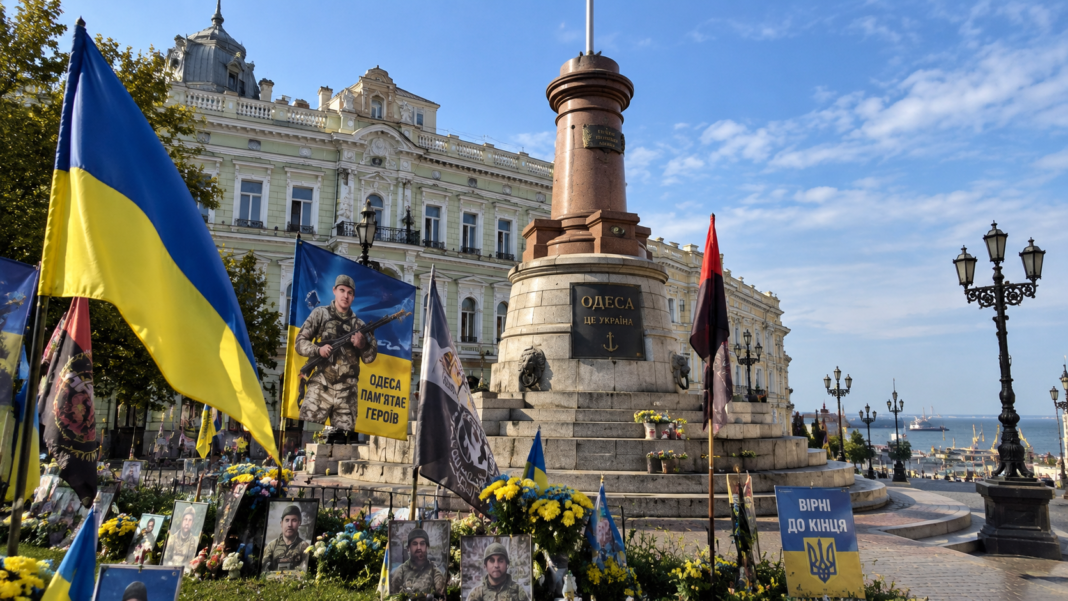
The debate carries particular weight in Odesa. The Black Sea port city has a long multilingual and multicultural history, and Russian remains widely spoken among its residents. At the same time, Odesa has repeatedly come under Russian missile and drone attacks during the war, intensifying questions about language, history and national identity.
Russian Remains the First Language of Many Ukrainians
Ukraine’s language landscape is complex.
Ukrainian is the country’s sole state language, but millions of Ukrainians grew up speaking Russian as their first language. Russian is also spoken by Ukrainian soldiers fighting against Moscow’s forces.
President Volodymyr Zelensky himself grew up primarily speaking Russian and frequently used it earlier in his political career. Since Russia’s full-scale invasion, however, he has generally conducted his public communications in Ukrainian.
Many Ukrainians are fluent in both languages, while others speak surzhyk, a mixture incorporating elements of Ukrainian and Russian.
Since Russia’s full-scale invasion began in February 2022, language has increasingly become associated with questions of national sovereignty and cultural independence.
Proposal Targets Music, Books and Entertainment
The Odesa proposal would seek to eliminate Russian-language cultural material from a range of public settings, including streets, parks, government institutions and publicly operated entertainment and arts venues.
Russian-language books would also face tighter restrictions in public libraries. Under existing practices, such books can remain available but are subject to limitations on how prominently they are displayed.
The proposed rules could reach beyond works produced in Russia.
Russian-language songs written or performed by Ukrainians could also be restricted in public spaces. That would represent an expansion of existing Ukrainian rules limiting public performances of music associated with Russian citizens, subject to certain exceptions.
Privately owned establishments would also be encouraged to restrict Russian-language cultural material, although enforcement in genuinely private settings would present different legal and practical questions.
Supporters See Language as Part of National Security
Supporters of stronger restrictions argue that Russian culture and language have historically been used by Moscow to reinforce political and cultural influence over Ukraine.
Odesa lawyer Artem Kartashov, who has advised local authorities on efforts to remove elements of what officials consider the city’s Russian imperial legacy, argues that cultural policy has become inseparable from Ukraine’s struggle to establish an identity independent of Russia.
From that perspective, reducing Russian-language cultural dominance is viewed not as an attack on individual Russian speakers but as part of a broader process of Ukrainian cultural restoration.
Supporters also point to the psychological effects of the war.
Anna Nerush, who supports restrictions in public spaces, has argued that hearing Russian-language material can be particularly distressing for former prisoners of war and people displaced from Russian-occupied territories.
Critics Warn About Freedom of Expression
Opponents, however, say the proposals risk alienating Ukrainians who strongly support their country but continue to speak Russian.
Comic actor Borys Barsky, one of Odesa’s prominent entertainers, has argued that Russian cannot be reduced to the language of Russian President Vladimir Putin.
Russian is also the language of a vast literary and cultural tradition, critics note, and many Ukrainian writers, musicians and artists have historically created works in Russian without identifying politically with Moscow.
Barsky’s Mask Theatre has previously faced fines over violations of Ukraine’s language regulations, including Russian-language promotional material.
Critics say such enforcement demonstrates how language policy can move from promoting Ukrainian into policing everyday cultural expression.
Putin Has Used Language as a Political Argument
The dispute is further complicated by the Kremlin’s longstanding use of Russian speakers in Ukraine as a justification for intervention.
Putin has repeatedly portrayed Russian-speaking Ukrainians as victims of systematic persecution. Ukraine and its international supporters have rejected Moscow’s broader claims, and Russia’s assertions about protecting Russian speakers were among the narratives used to justify its invasion.
That has placed Russian-speaking Ukrainians in a particularly complicated position.
Many have fought for Ukraine, lost relatives in the war or fled cities destroyed by Russian forces while continuing to use Russian as their primary language.
For some Ukrainians, therefore, language and political loyalty cannot simply be treated as interchangeable.
Odesa Reconsiders Its Russian Imperial Past
The language debate forms part of a larger reassessment of Odesa’s history.
For generations, official narratives strongly emphasized the city’s development under the Russian Empire, particularly its association with Empress Catherine II.
But Ukrainian historians and activists have increasingly highlighted communities and settlements that existed in the region before the Russian imperial period.
A prominent statue of Catherine the Great was removed from a central Odesa square following a city council vote in 2022. Streets have also been renamed in honor of Ukrainian cultural and historical figures.
Photographer Natalia Mykhailenko, who conducts tours emphasizing the city’s non-Russian history, supports the broader process of cultural change.
She argues that Ukraine must confront what she considers its colonial relationship with Russia, even while acknowledging that some measures can raise difficult democratic questions.
A Question of Identity — and Liberty
Anthropologist Anastasia Piliavsky, associated with Ukrainian Cosmopolis, approaches the controversy differently.
She argues that restrictions risk making Russian-speaking Ukrainians feel that an important part of their cultural heritage has become unacceptable.
For critics like Piliavsky, the central issue is therefore not whether Ukrainians understand Ukrainian—they overwhelmingly do—but how far a democratic state at war should go in regulating cultural expression.
That tension has become one of the most difficult questions emerging from Ukraine’s attempt to distance itself from centuries of Russian political and cultural influence.
Ukraine Has Already Expanded Ukrainian-Language Requirements
Ukraine’s 2019 state-language law established Ukrainian as the required language across numerous areas of public life, including government, education and many commercial interactions.
Public-facing employees such as shop workers, restaurant staff and medical professionals generally begin interactions in Ukrainian, although conversations can switch to another language when both parties agree.
Those measures accelerated a linguistic transformation already underway.
Since Russia’s 2022 invasion, many Ukrainians who previously spoke Russian in everyday life have voluntarily switched partly or entirely to Ukrainian as an expression of national identity.
Yet Russian continues to be widely heard, particularly in major cities in southern and eastern Ukraine.
How Quickly Should Odesa Change?
Physics teacher Pavlo Viktor, whose online lessons have attracted large audiences, has also found himself caught in the language debate.
Viktor originally produced educational material in Russian, his first language, before translating lessons into Ukrainian. He later faced criticism after saying he would speak Russian to frightened children during missile attacks when that was the language in which they felt most comfortable.
His position represents a more gradual approach to linguistic change.
Rather than forcing people to abandon Russian, Viktor has argued that Ukrainian authorities should create conditions in which younger generations naturally choose Ukrainian.
The disagreement illustrates the larger question confronting Odesa: not simply whether Ukrainian should become increasingly dominant—it already is becoming more prominent—but how that transition should occur.
For supporters of the proposed restrictions, Russia’s invasion has made cultural separation urgent.
For opponents, protecting Ukraine from Russian aggression should not require restricting the cultural freedoms of Ukrainians who happen to speak Russian.
As Odesa weighs the proposal, the debate has become a test of how a country fighting for its sovereignty balances national identity, wartime security and individual freedom.