
Las Vegas jury finds former gang leader guilty of first-degree murder after prosecutors argued he organized the retaliatory 1996 attack that killed one of hip-hop’s most influential artists
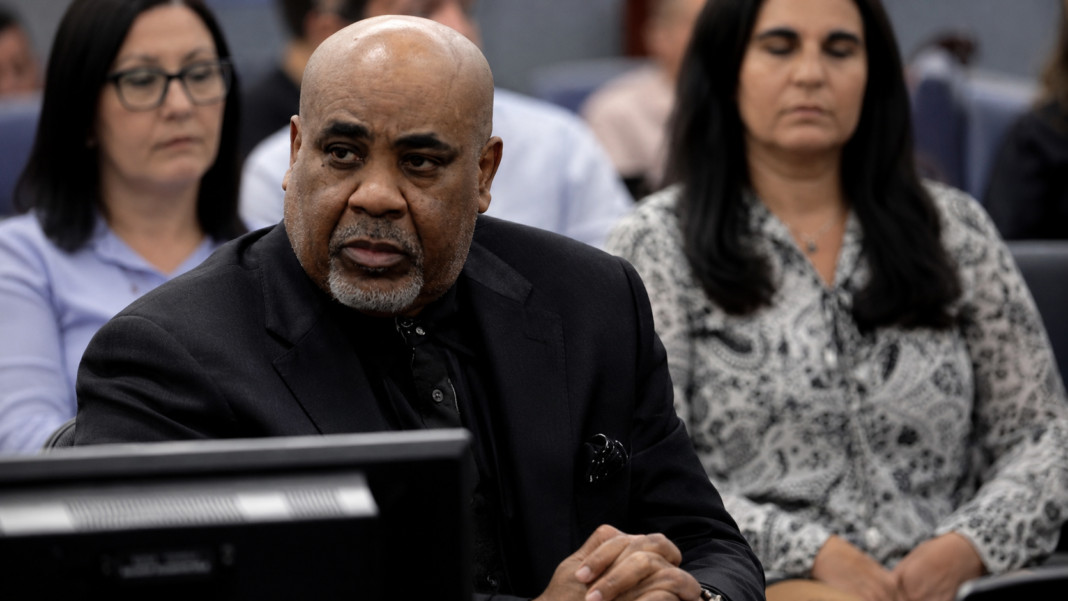
LAS VEGAS — Nearly three decades after the killing of Tupac Shakur became one of the most enduring mysteries in American music history, a Nevada jury has convicted Duane “Keffe D” Davis of first-degree murder for his role in orchestrating the 1996 drive-by shooting that claimed the rapper’s life.
The Clark County jury returned the unanimous verdict Monday after deliberating for roughly three hours, finding the 63-year-old former South Side Compton Crips leader guilty of first-degree murder with a deadly weapon. Davis now faces the possibility of spending the rest of his life in prison. Sentencing is scheduled for Oct. 13. He has indicated that he plans to appeal.
The verdict represents the first murder conviction in a case that remained officially unresolved for almost 30 years, generating investigations, books, documentaries and countless theories about who was responsible for the death of the 25-year-old rap star.
Prosecutors Said Davis Organized the Attack
Davis was not accused of personally firing the bullets that struck Shakur.
Instead, prosecutors built their case around the contention that Davis helped organize the retaliation, obtained the firearm used in the attack and supplied it to members of the group traveling in the white Cadillac that approached Shakur’s vehicle.
Under Nevada law, prosecutors did not have to prove Davis personally pulled the trigger to hold him criminally responsible for the killing. They argued that his participation in arranging and facilitating the attack made him legally responsible for Shakur’s death.
That theory ultimately persuaded the jury.
Davis’ Own Words Became Central to the Case
Perhaps the most consequential evidence against Davis came not from DNA, fingerprints or newly discovered surveillance footage, but from statements he made himself over many years.
Jurors heard portions of interviews, recorded conversations and other statements in which Davis discussed being inside the Cadillac involved in the shooting.
In a 2008 law-enforcement interview played for jurors, Davis said his nephew, Orlando “Baby Lane” Anderson, fired the fatal shots. Davis also previously described supplying the firearm used during the attack.
His public comments continued years later, including discussions surrounding his 2019 memoir, Compton Street Legend. Those statements helped revive investigative interest in a case that had long appeared unlikely to produce a prosecution.
Prosecutors argued that while some details of Davis’ accounts varied, his fundamental description of his involvement remained consistent.
His defense took a radically different position.
Attorney Michael Sanft argued that Davis had embellished or fabricated stories about the killing to attract attention, enhance his street reputation and sell books. The defense also emphasized weaknesses in the government’s corroborating evidence.
That argument gained some support during testimony when a former Las Vegas homicide detective acknowledged that investigators had been unable to independently verify Davis’ incriminating account, despite believing portions of what he said.
The jury nevertheless concluded that the prosecution had proven its case beyond a reasonable doubt.
A Casino Fight Preceded the Shooting
The events that culminated in Shakur’s death began on the night of Sept. 7, 1996.
Shakur and Death Row Records co-founder Marion “Suge” Knight had attended the Mike Tyson-Bruce Seldon heavyweight boxing match at the MGM Grand in Las Vegas.
After the fight, Shakur, Knight and members of their entourage became involved in an assault on Anderson, Davis’ nephew and a member of the South Side Compton Crips. The confrontation was captured by casino surveillance cameras.
Prosecutors said the beating triggered a retaliation.
According to their case, Davis and three other men obtained a gun, climbed into a white Cadillac and began searching for Shakur and Knight.
Later that night, the Cadillac approached Knight’s BMW near the Las Vegas Strip.
Gunfire erupted.
Shakur was struck multiple times, while Knight was also wounded. Shakur was rushed to a hospital and died six days later, on Sept. 13, 1996.
He was only 25.
Nearly Three Decades Without a Conviction
For years, investigators struggled to turn suspicions surrounding the shooting into a prosecutable criminal case.
Potential witnesses were reluctant to cooperate, physical evidence was limited, and gang loyalties complicated investigators’ efforts to reconstruct exactly what happened.
The three other men authorities associated with the Cadillac have since died, leaving Davis as the only surviving alleged participant identified in the prosecution’s account.
The investigation gained new momentum as Davis increasingly spoke publicly about the shooting.
He was ultimately arrested and charged in 2023, setting in motion the prosecution that culminated in Monday’s verdict.
Prosecutors called 24 witnesses before resting their case, presenting testimony about the gang rivalry, the events preceding the shooting and Davis’ numerous statements over the years.
A Landmark Moment in Hip-Hop History
Shakur’s murder occurred during an extraordinarily turbulent period in American hip-hop.
The rapper had become closely associated with Death Row Records and the West Coast rap scene at a time when tensions between artists, record companies and street organizations were frequently intertwined.
But Shakur’s legacy has long transcended the circumstances surrounding his death.
Born in East Harlem in 1971, he became one of the most consequential artists of his generation, combining commercial success with music addressing poverty, racism, policing, violence, inequality, family and survival.
Songs including “Dear Mama,” “California Love,” “Changes” and “I Ain’t Mad at Cha,” along with the landmark album All Eyez on Me, helped establish a catalog that continued reaching new generations long after his death.
His influence extended beyond music into film, fashion, political expression and popular culture. Decades later, fans continue to regard Shakur not simply as a rapper but as a cultural voice whose work reflected the contradictions and struggles of American life.
Verdict Brings a Historic Case to a New Stage
Monday’s conviction does not erase the unanswered questions and competing theories that accumulated during three decades of investigation.
It does, however, fundamentally change the legal history of the case.
For the first time since Shakur was shot on a Las Vegas street in September 1996, a jury has found someone criminally responsible for his murder.
Davis’ expected appeal means the legal battle is not necessarily over. His sentencing on Oct. 13 will determine the punishment he receives, with life imprisonment among the possible outcomes.
For Shakur’s family, fans and a generation that grew up with his music, the verdict marks an extraordinary development in a case that for decades appeared destined to remain one of hip-hop’s greatest unsolved crimes.
The Haitian Tribune | U.S. News & Entertainment