
Electoral authorities push ahead with presidential and legislative elections scheduled for Dec. 13, but security, financing and public confidence remain critical tests for Haiti’s return to elected government
PORT-AU-PRINCE, Haiti — Haiti’s long-awaited electoral process is entering a critical phase, with the country’s Provisional Electoral Council extending the candidate-registration process as political parties prepare for presidential and legislative elections currently scheduled for December 13, 2026.
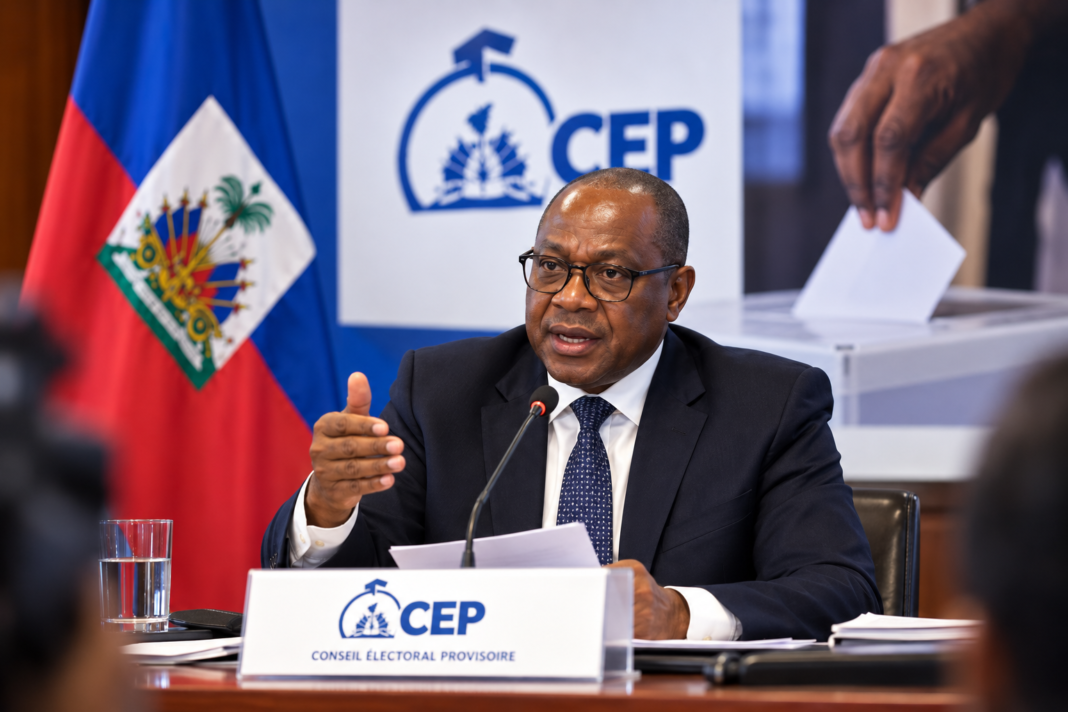
The Conseil Électoral Provisoire (CEP) announced Sept. 2 that the candidate-registration process, originally scheduled to conclude Oct. 2, will now run through Oct. 14. The council said the adjustment followed requests from political parties and political groupings seeking additional time to complete registration requirements.
The extension represents another important step in Haiti’s effort to restore elected national institutions after years of political upheaval, institutional paralysis and escalating gang violence.
Under the CEP’s current calendar, Haitians are expected to vote Dec. 13 in the first round of presidential and legislative elections, alongside a proposed popular ratification of constitutional changes. A second round, if necessary, is scheduled for Feb. 21, 2027, together with elections for territorial authorities.
The CEP has cautioned, however, that those dates remain dependent on two major conditions: an acceptable security environment and sufficient financing to carry out electoral operations.
Candidate Registration Extended
The revised candidate-registration process contains several stages rather than a single Oct. 14 filing deadline.
Online candidate registration, which began Aug. 20, is scheduled to remain open through Sept. 20. Candidates must submit required documentation between Sept. 13 and Sept. 22, while electoral authorities will analyze applications through Sept. 28.
The preliminary list of registered candidates is scheduled for publication Sept. 29. Challenges will then move through Haiti’s electoral dispute system before the CEP publishes the final list of approved candidates on Oct. 14.
The revised timetable is:
- Sept. 20: Online registration deadline
- Sept. 22: Deadline for required documents
- Sept. 28: Candidate-file review concludes
- Sept. 29: Preliminary candidate list
- Sept. 30-Oct. 7: Challenges before the BCEC
- Sept. 30-Oct. 9: Challenges before the BCED
- Oct. 7-13: Appeals handled by the BCEN
- Oct. 14: Final list of approved candidates
The council urged political organizations to take advantage of the additional time and complete all necessary formalities.
December 13 Remains Election Day
Importantly, the CEP’s Sept. 2 announcement did not change the Dec. 13 election date.
The current 2026-2027 electoral calendar, officially published July 27, schedules the first round of presidential and legislative voting for Dec. 13. Preliminary presidential and legislative results are expected Dec. 19, with challenges continuing into January and definitive first-round results scheduled for Jan. 9, 2027.
If no presidential candidate satisfies the requirements for a first-round victory, the second round is scheduled for Feb. 21.
Definitive presidential and legislative second-round results are currently expected on March 7, 2027.
The calendar is ambitious for a country that has gone years without national elections.
Haiti Faces a Historic Political Test
The coming election is about considerably more than selecting a president.
Haiti has operated for years without fully functioning elected national institutions. The absence of elections, combined with the assassination of President Jovenel Moïse in 2021, repeated political transitions and the expansion of armed gangs, has produced one of the deepest institutional crises in the country’s recent history.
The next elections are therefore being viewed as a potential pathway toward restoring constitutional government and political legitimacy.
But organizing a credible vote will require more than printing ballots and opening polling stations.
Election workers must be recruited and trained. Voting materials must be distributed. Candidates must be able to campaign. Voters need access to registration and polling centers. Observers and political-party representatives must be able to operate safely.
Above all, Haitians must be able to vote without intimidation.
Security Could Determine Whether the Calendar Holds
Security remains perhaps the greatest obstacle.
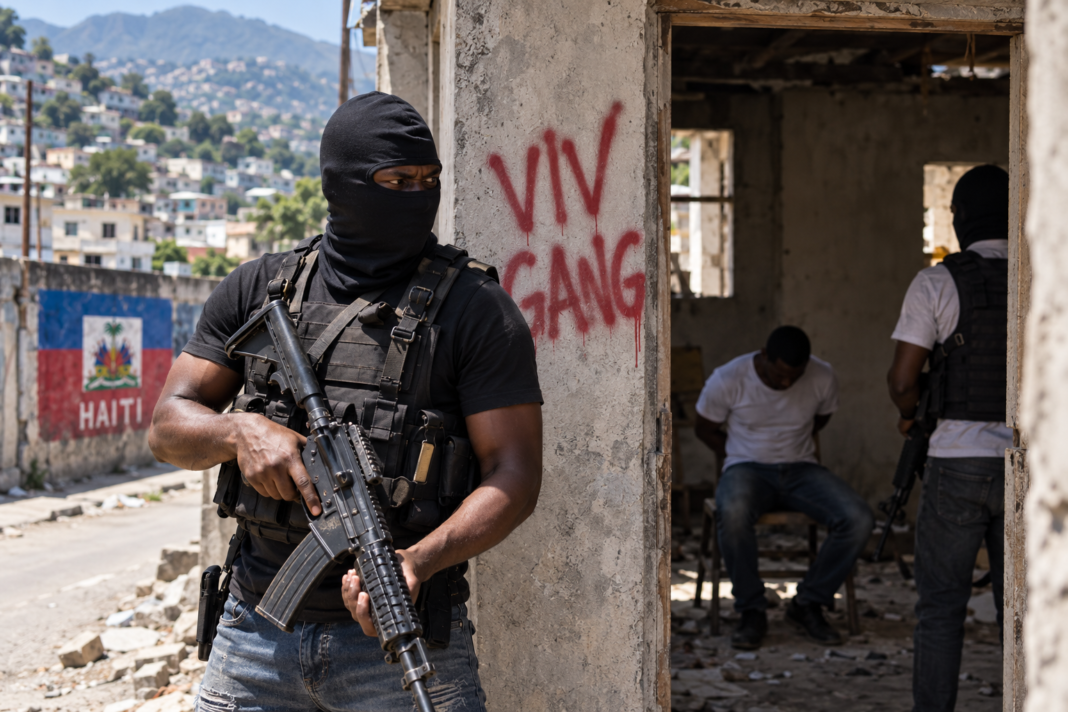
Armed groups continue to exercise influence or control over parts of the Port-au-Prince metropolitan region and other strategic corridors. Gang violence has displaced large numbers of residents and disrupted transportation, commerce and access to government services.
Those conditions create fundamental electoral questions.
How will polling centers function in insecure neighborhoods? Will displaced citizens be able to vote? Can election materials reach communities where roads are dangerous or inaccessible? And can candidates campaign throughout the country without exposing themselves, supporters and voters to violence?
The CEP itself has acknowledged the problem.
When announcing the current calendar, the council explicitly stated that meeting the election dates depends on establishing an acceptable security climate.
That qualification means Dec. 13 remains the official target—but its success will depend heavily on developments during the next three months.
Financing Is Another Major Challenge
Money is the other major prerequisite identified by electoral authorities.
A nationwide election requires substantial resources for personnel, ballots, transportation, voting centers, security, communications, tabulation and electoral dispute mechanisms.
The CEP has said adequate financing is necessary for the calendar to proceed as planned and has emphasized that organizing the elections requires cooperation among government institutions, political actors and Haiti’s national and international partners.
With Haiti already facing enormous humanitarian, security and economic demands, election financing will remain an important test of the process.
Voter Registration Continues
The election preparations are occurring alongside an ongoing voter-registration effort.
Under the July electoral calendar, voter registration began July 20 and is scheduled to continue through Oct. 13.
That process is particularly important because years of displacement and migration have changed where many Haitians live.
Ensuring eligible citizens have access to the electoral system will be central to determining whether the eventual results are regarded as broadly representative.
For Haiti’s political class, the responsibility will also extend beyond simply registering candidates. Parties will face pressure to explain their programs for security, economic recovery, institutional reform, corruption, education, employment and rebuilding public services.
A Crowded Political Landscape Takes Shape
The extension gives political organizations more time to formalize their candidates, but it also means Haitians will have to wait until Oct. 14 for the definitive list of candidates approved by the electoral authorities.
Until that process is completed, public declarations of political interest should not automatically be treated as confirmation that a person is an officially approved presidential candidate.
The distinction will be especially important during the coming weeks as political figures announce ambitions, parties negotiate alliances and prospective candidates seek nominations.
Only after the CEP completes the registration, challenge and appeal process will the final electoral field be formally established.
Transparency Will Be Closely Watched
The CEP says it intends to administer the process in an inclusive, impartial, transparent and responsible manner while respecting electoral independence and integrity.
Those commitments will face intense scrutiny.
Haiti’s history of disputed elections means transparency at every stage—from candidate approval and voter registration to ballot counting and publication of results—will be essential to public confidence.
Political parties will also bear responsibility for accepting electoral rules, using legal mechanisms to challenge disputed decisions and avoiding violence or intimidation.
Independent observers, journalists and civil-society organizations are likely to play an important role in monitoring the process.
What Happens Next
The weeks ahead will provide the clearest indication yet of whether Haiti can maintain the December timetable.
By Sept. 20, online candidate registration should close. Required documentation is due by Sept. 22, and the preliminary candidate list is expected Sept. 29. Electoral challenges and appeals will follow, leading to the definitive list on Oct. 14.
Meanwhile, voter registration is scheduled to continue until Oct. 13, and the first-round election remains set for Dec. 13.
The timetable is now moving from planning into execution.
For millions of Haitians, the larger question is not simply whether an election can be held. It is whether Haiti can conduct a vote that is secure, inclusive, transparent and credible enough to begin restoring confidence in democratic government.
After years of unelected transitional rule and political uncertainty, the stakes could hardly be higher.
The Haitian Tribune | Haiti & Politics