
President cites his relationship with Kim Jong Un as military officials warn that Pyongyang is gaining valuable battlefield experience through its involvement in Russia’s war against Ukraine
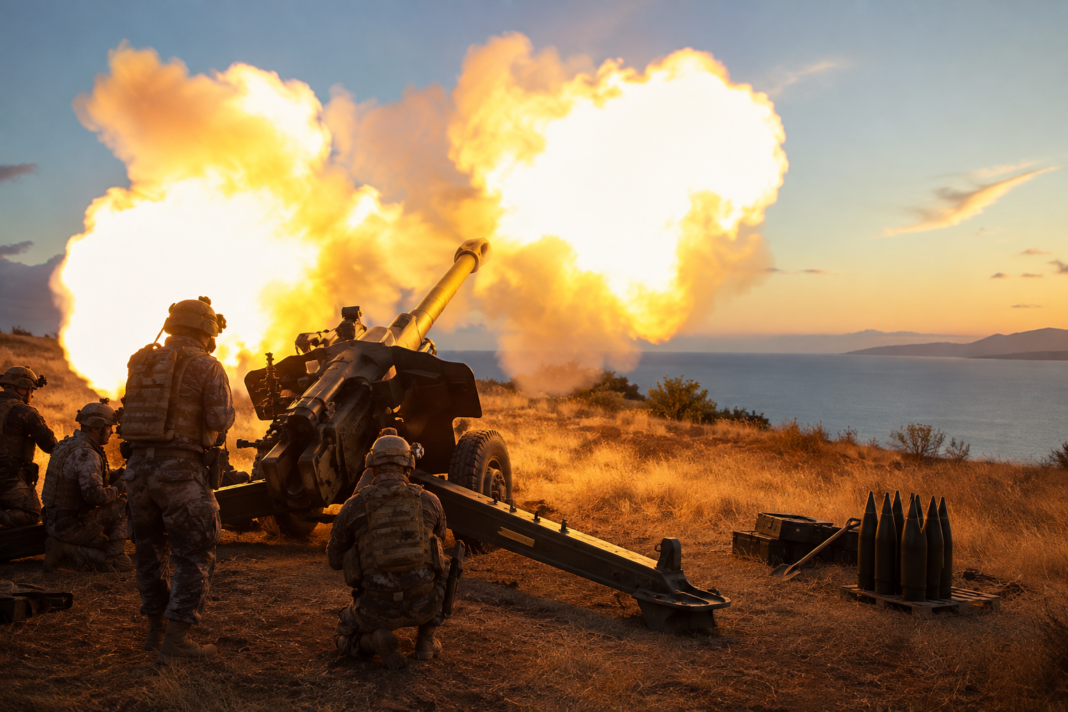
WASHINGTON — President Donald Trump has ordered a reduction in major joint military exercises between the United States and South Korea, arguing that the drills are costly and unnecessarily provocative toward North Korea.
The decision comes as the annual Ulchi Freedom Shield exercises begin Monday and are scheduled to continue through August 27. The drills are among the largest recurring military exercises conducted by Washington and Seoul and are intended to strengthen their ability to respond to potential threats on the Korean Peninsula.
About 18,000 South Korean troops had been expected to participate alongside U.S. forces and personnel from several countries affiliated with the United Nations Command.
Trump Points to Relationship With Kim Jong Un
Trump announced Sunday that he was dissatisfied with the United States’ participation in the exercises, citing his relationship with North Korean leader Kim Jong Un.
The president has repeatedly emphasized his personal rapport with Kim and has argued that maintaining communication with the North Korean leader could reduce tensions between Washington and Pyongyang.
Trump also criticized the financial burden of the exercises on the United States and suggested that continuing large-scale drills sends what he considers an unnecessarily hostile signal to North Korea.
Because preparations were already too advanced to cancel the exercises completely, Trump said he instructed Defense Secretary Pete Hegseth to substantially reduce their scope.
Military Officials Warn North Korea Is Becoming More Capable
The decision comes despite concerns among U.S. and South Korean military officials that North Korea may be improving its military capabilities through experience connected to Russia’s war in Ukraine.
North Korea has significantly expanded military cooperation with Moscow. Pyongyang has provided weapons and troops to support Russia, giving North Korean forces exposure to modern warfare and battlefield conditions.
Military analysts have expressed concern that experience involving drones, artillery, electronic warfare and other technologies could eventually strengthen North Korea’s own forces.
Those developments make military preparedness on the Korean Peninsula particularly important, according to supporters of continued large-scale exercises.
Joint Drills Remain a Source of Tension
For decades, the United States and South Korea have conducted military exercises as a central component of their defense alliance.
Washington and Seoul maintain that the exercises are defensive and necessary to ensure their militaries can operate together effectively in the event of an attack.
North Korea sees them differently.
Pyongyang has routinely condemned U.S.-South Korean exercises as rehearsals for war and has frequently responded with missile tests, military demonstrations and strongly worded statements.
Trump’s decision appears intended, at least partly, to reduce those tensions and potentially create a more favorable environment for renewed diplomacy.
Trump Again Turns to Personal Diplomacy
Trump’s approach recalls his first presidency, when he pursued an unprecedented diplomatic relationship with Kim.
The two leaders held several high-profile meetings beginning in 2018 as Washington sought an agreement that would lead to North Korea’s denuclearization.
The summits temporarily eased tensions and produced extraordinary images of an American president meeting directly with a North Korean leader. However, negotiations ultimately failed to produce an agreement eliminating Pyongyang’s nuclear weapons program.
North Korea has since continued developing its nuclear and ballistic missile capabilities.
Trump nevertheless appears convinced that maintaining a working relationship with Kim could offer another path toward negotiations.
Questions for the U.S.-South Korea Alliance
Scaling back the exercises could also create uncertainty in Seoul.
South Korea depends heavily on its military alliance with Washington to deter aggression from the North, while thousands of American military personnel remain stationed in the country.
Supporters of Trump’s approach may see reducing the drills as a practical diplomatic gesture that could lower tensions without abandoning the U.S. commitment to South Korea.
Critics, however, are likely to argue that reducing military training at a time when North Korea is strengthening its relationship with Russia could undermine preparedness and provide Pyongyang with concessions without requiring comparable steps in return.
The decision therefore creates a difficult balancing act for Washington: Trump wants to preserve his relationship with Kim Jong Un and reopen the possibility of diplomacy, while military planners must prepare for a North Korean force that may be becoming more experienced and sophisticated.
Whether reducing the exercises leads to renewed negotiations—or further questions about America’s security commitments in Asia—will now be closely watched in Seoul, Pyongyang and Washington.
The Haitian Tribune | World News