
More than 10,000 infections have been recorded as health officials struggle with contact tracing, delayed treatment and cross-border cases
KINSHASA, Democratic Republic of the Congo (The Haitian Tribune) — The death toll from Congo’s rapidly expanding Ebola outbreak has exceeded 5,000, intensifying concerns about the country’s ability to contain the virus.
The Congolese Ministry of Health reported Saturday that 5,026 people had died among 10,351 confirmed infections, a fatality rate of nearly 50%. An additional 2,788 patients have recovered.
Declared in mid-May, the outbreak is caused by the Bundibugyo strain of the Ebola virus. No approved vaccine or virus-specific treatment is currently available for that strain, although patients receive supportive care based on their symptoms. ABC News
The crisis is now the second-deadliest Ebola outbreak on record, behind the 2014–2016 epidemic in West Africa, which killed more than 11,000 people.
Dr. Patrick Otim, a World Health Organization program manager, said the latest milestone represents thousands of families and communities devastated by the disease, not merely a statistic.
Eastern Congo remains the epicenter
Since May, health officials have detected infections in 67 of Congo’s 178 health zones across eight provinces. Fifty affected zones continue to report active transmission.
The eastern provinces of Ituri and North Kivu remain the hardest hit, accounting for 9,782 infections and 4,792 deaths, according to the latest government figures.
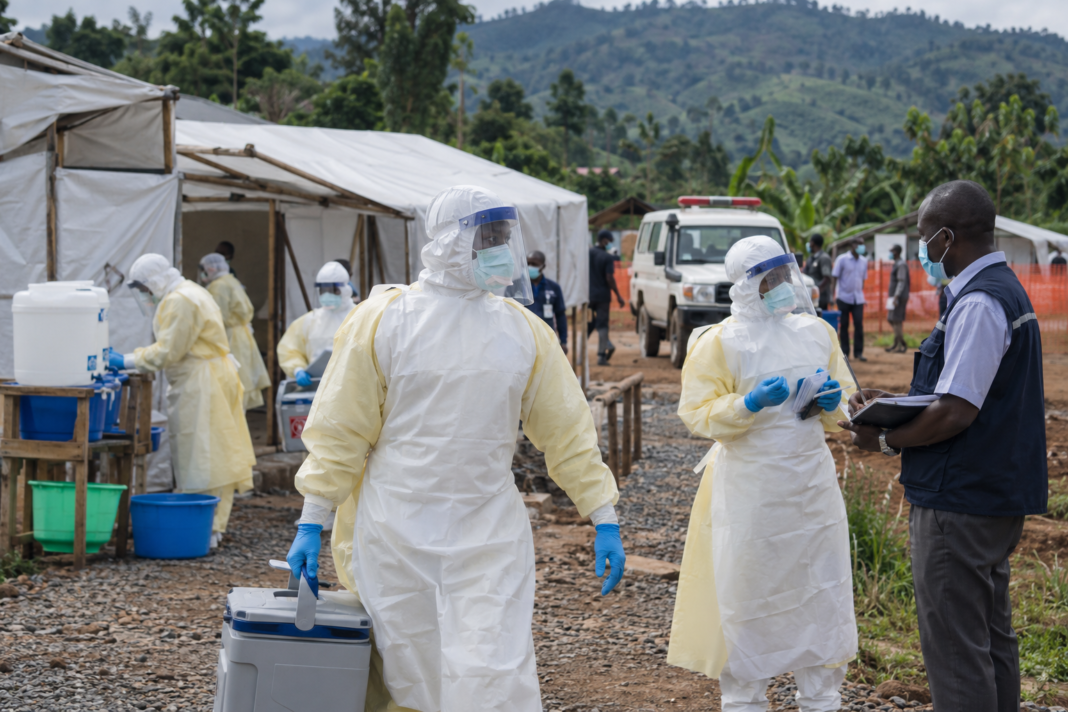
Containment efforts have been complicated by insecurity, attacks on health workers, limited resources, and distrust in some communities. Officials have also faced serious difficulties identifying infected people, tracing their contacts, and conducting timely testing.
Approximately 80% of new infections have been detected among people who were not already being monitored as contacts, suggesting that many transmission chains remain unknown to health authorities.
About one-third of the people who died never reached an Ebola treatment center. Many died in their communities before being tested, reducing their chances of survival while increasing the risk of further transmission.
The WHO has emphasized that early detection and access to supportive medical care can improve patient outcomes. who.int
Cases reported beyond Congo
The outbreak has also produced cases outside Congo. Kenya and Nigeria have reported infections linked to international travel, while earlier cases were documented in Uganda and France.
Health agencies have called for stronger surveillance at border crossings, faster testing, and closer coordination among affected countries. The WHO has not recommended restrictions on travel or trade, saying coordinated public-health measures are more effective for limiting the outbreak’s spread. who.int
As infections continue to rise, health officials say the immediate priority is to reach sick people sooner, identify transmission chains, and ensure patients receive care before their conditions become critical.