
U.S. lawmakers question the legality of easing Russian energy restrictions while the White House seeks to lower fuel prices and revive diplomatic efforts to end the war.
By The Haitian Tribune Staff | October 12, 2026
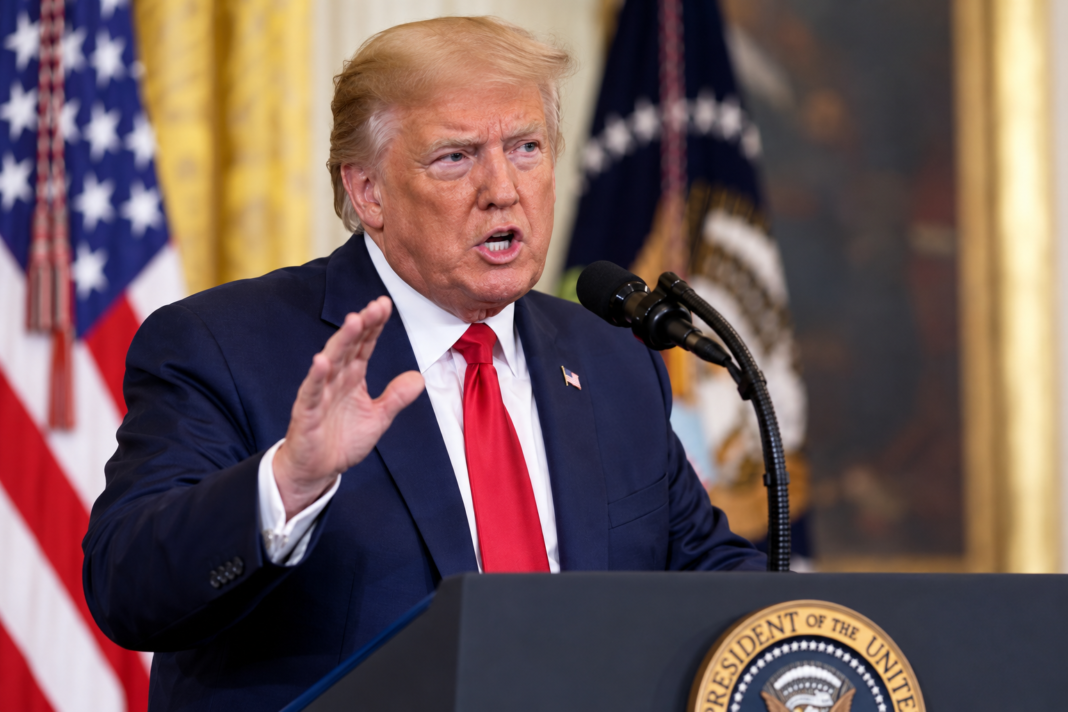
WASHINGTON, D.C. — President Donald Trump has called for an immediate halt to Russian and Ukrainian attacks on each other’s energy infrastructure, declaring that both countries had agreed to a ceasefire despite the absence of public confirmation from Moscow and Kyiv.
The announcement comes amid growing criticism in Washington over the administration’s decision to ease restrictions on Russian energy exports, a move that has drawn opposition from Democratic and Republican lawmakers concerned about its legality and potential consequences for the war in Ukraine.
In a message posted Sunday on his Truth Social platform, Trump announced what he described as an immediate energy ceasefire between the two countries.
However, Russia had not publicly accepted such an arrangement, and no independently confirmed agreement had emerged from either government.
The discrepancy has raised questions about whether Trump’s announcement reflects a genuine diplomatic breakthrough or another attempt to pressure both sides into negotiations.
A Proposed Ceasefire Focused on Energy Infrastructure
The president’s latest initiative seeks to stop attacks on power plants, oil refineries, pipelines, and other facilities essential to energy production and distribution.
Since Russia launched its full-scale invasion of Ukraine in February 2022, energy infrastructure has become a major target in the conflict.
Russian attacks have repeatedly damaged Ukraine’s electricity generation and transmission systems, leaving communities vulnerable to blackouts and disrupting essential services.
Ukraine, meanwhile, has expanded strikes against Russian oil refineries, fuel depots, and other facilities that contribute to Moscow’s economic and military capabilities.
A mutually respected ceasefire covering energy infrastructure could reduce civilian hardship and protect critical facilities.
Nevertheless, such an agreement would require clearly defined terms, credible monitoring, and commitments from both governments.
Without those safeguards, the announcement alone would not guarantee an end to attacks.
Russian Energy Export Decision Faces Congressional Resistance
The diplomatic controversy has intensified following the Trump administration’s decision to permit certain Russian petroleum exports to reach international markets, including the United States.
According to the reported policy change, the administration is seeking to increase global energy supplies and ease pressure on fuel prices.
However, a bipartisan group of senators has challenged the decision, arguing that allowing Russian energy imports into the United States could violate restrictions established by Congress in 2022.
That legislation was adopted following Russia’s invasion of Ukraine and was intended to limit American purchases of Russian oil and related energy products.
Lawmakers opposing the administration’s approach argue that relaxing restrictions could provide Moscow with additional revenue while Russian military operations continue.
Their concerns also raise a broader constitutional question: how much authority does the executive branch possess to modify restrictions that Congress has enacted into law?
The answer depends on the specific legal provisions, any presidential waiver authority, and the details of the administration’s proposed export arrangements.
The Economic Pressure Behind Trump’s Decision
Energy prices have become an important consideration in the administration’s foreign policy calculations.
Crude oil and refined petroleum products are traded through interconnected global markets. Disruptions involving major producers can affect gasoline, diesel, transportation, manufacturing, and food distribution costs worldwide.
Russia remains a major energy producer despite sanctions imposed by the United States and its allies.
Increasing the availability of Russian petroleum could potentially relieve some supply pressures, although the actual impact would depend on production levels, shipping capacity, market conditions, and the scope of sanctions relief.
The administration’s apparent calculation is that additional supply could help stabilize energy markets while diplomatic pressure encourages Russia and Ukraine to reduce hostilities.
Critics, however, warn that lowering economic pressure on Moscow before a verified ceasefire could weaken Western negotiating leverage.
They also argue that additional energy revenue could help Russia sustain its military campaign.
Supporters of a more flexible sanctions approach maintain that carefully structured economic incentives might create opportunities for negotiations that prolonged isolation has failed to produce.
Growing Tensions Between Washington and Kyiv
The dispute comes as Trump’s relationship with Ukrainian President Volodymyr Zelensky remains strained.
Trump has increasingly criticized Ukraine’s leadership over the continuation of the war, while emphasizing his desire to secure a negotiated settlement.
Ukraine maintains that any durable peace must protect its sovereignty, territorial integrity, and long-term security.
Kyiv has also expressed concern that diplomatic arrangements imposed without meaningful Ukrainian participation could leave the country vulnerable to renewed Russian attacks.
Russia, meanwhile, continues to pursue its own territorial and security demands.
These competing objectives have repeatedly complicated efforts to negotiate a comprehensive settlement.
A limited energy ceasefire could represent a practical confidence-building measure, but it would not resolve the underlying disputes over territory, security guarantees, sanctions, and accountability.
Analysis: Can Lower Energy Prices and Peace Negotiations Work Together?
The administration’s approach reflects a difficult balance between domestic economic priorities and international security commitments.
Lower fuel prices can benefit American households and businesses. Diesel costs, in particular, influence trucking, agriculture, construction, and the movement of consumer goods.
But economic relief achieved through reduced sanctions on Russia carries potential diplomatic consequences.
Sanctions are intended not only to restrict commercial activity but also to influence the behavior of governments engaged in actions that the United States and its allies oppose.
Relaxing those measures without obtaining meaningful concessions could reduce their effectiveness.
Conversely, sanctions relief tied to independently verified commitments could become part of a broader negotiated settlement.
The critical distinction is whether economic concessions are offered in advance or made conditional on measurable progress.
For any energy ceasefire to become credible, both Russia and Ukraine would need to acknowledge the agreement, define which facilities are protected, establish procedures for reporting violations, and identify a mechanism for resolving disputes.
Without those elements, the risk of renewed attacks would remain substantial.
What the Dispute Means for the International Community
The consequences of the war extend well beyond Europe.
Energy market instability affects developing economies that depend heavily on imported petroleum, including Caribbean countries such as Haiti.
Higher fuel prices can increase transportation costs, electricity generation expenses, and the price of essential commodities.
For Haiti, where economic vulnerability and insecurity already place considerable pressure on households, major changes in international energy markets can have serious domestic consequences.
A genuine reduction in hostilities between Russia and Ukraine could therefore offer benefits far beyond the countries directly involved.
However, lasting economic stability will depend on more than political announcements. It will require verifiable agreements, consistent implementation, and sustained diplomatic engagement.
A Ceasefire Announcement Without a Confirmed Agreement
For now, Trump’s declaration remains a proposal whose implementation has not been publicly established.
The White House faces pressure to explain both the legal basis for its Russian energy policy and how any sanctions relief would advance negotiations rather than simply benefit Moscow.
Congressional opposition also suggests that the administration could encounter significant obstacles if it attempts to expand Russian energy access to American markets.
The coming days will be important in determining whether Russia and Ukraine move toward a limited agreement protecting energy infrastructure or whether the president’s announcement becomes another unsuccessful attempt to interrupt the fighting.
The central question is no longer simply whether Washington can encourage a ceasefire, but whether it can secure one that both sides recognize, respect, and enforce.
The Haitian Tribune | World News & Political Analysis | October 12, 2026