
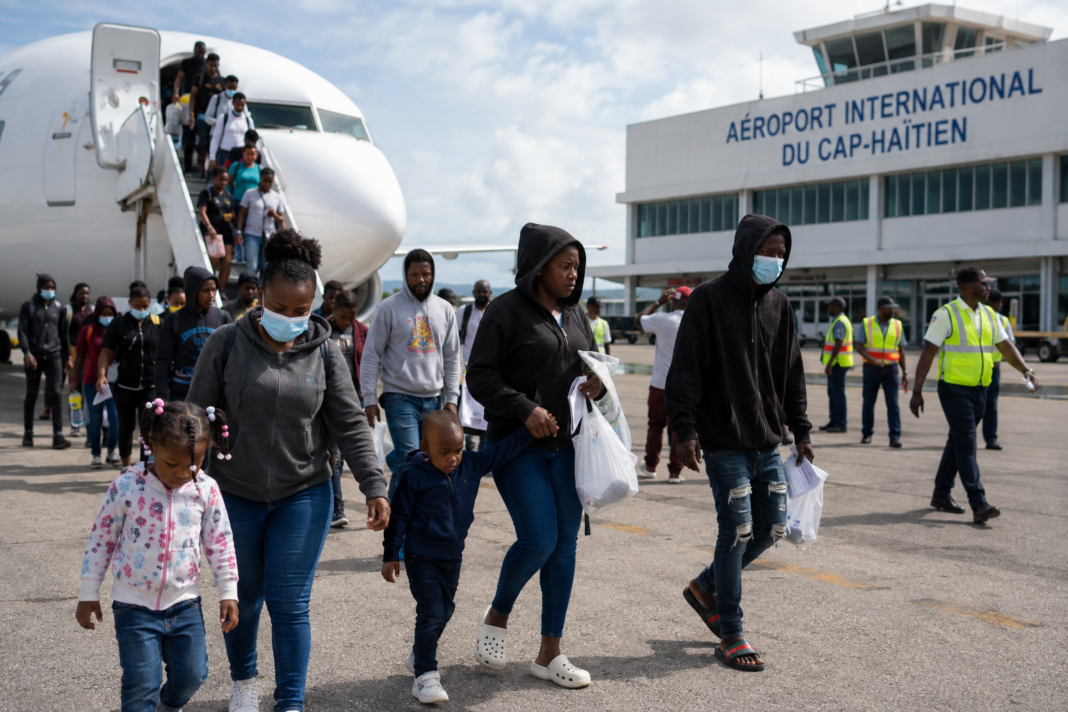

Latest deportation flight arrives in Cap-Haïtien as Haiti faces growing pressure to receive nationals returned from the United States
CAP-HAÏTIEN, Haiti — More than 50 Haitian nationals were deported from the United States to Haiti on Thursday, August 27, including children and people who had sought asylum, as U.S. immigration authorities continue removals of Haitians whose legal status no longer allows them to remain in the country.
The group arrived around midday at Cap-Haïtien International Airport, according to local reports. The flight was described as the second major deportation flight carrying Haitians since the expiration of Temporary Protected Status, or TPS, for affected Haitian beneficiaries.
An earlier flight arrived in Haiti on August 21 carrying 161 Haitian nationals, according to the reports.
The latest arrivals signal what could become a sustained period of deportations as U.S. immigration authorities increase enforcement involving Haitian nationals who are subject to final removal orders or who otherwise lack authorization to remain in the United States.
Deportation Flights Expected to Continue
Reports indicate that additional flights to Haiti are expected, potentially as frequently as twice a week.
That possibility has generated concern among Haitian migrant advocates because some deportees may return with children or after spending years establishing their lives in the United States.
The presence of reported asylum seekers among the latest deportees also raises questions about the circumstances of their individual immigration cases. Seeking asylum does not automatically prevent removal; outcomes can depend on whether an application remains pending, has been denied, or whether a final removal order has been issued.
TPS Changes Put Haitian Community Under Pressure
The deportations come amid major uncertainty for Haitians who previously relied on Temporary Protected Status.
TPS is a humanitarian immigration designation that allows eligible nationals of certain countries experiencing armed conflict, natural disasters or other extraordinary conditions to temporarily live and work legally in the United States. It does not, by itself, provide permanent residency or citizenship.
The termination of protections for Haitian beneficiaries has therefore created serious concerns within Haitian communities across the United States, particularly among families who have lived in the country for years.
Reports have estimated that hundreds of thousands of Haitians could be affected by changes to TPS. However, losing TPS does not necessarily mean automatic deportation. A person’s vulnerability to removal depends on their individual immigration circumstances, including whether they have another lawful status, a pending immigration application, an asylum claim or other legal protection.
Questions About Returning Families
The deportations also present a significant challenge for Haiti.
People arriving after years abroad may return without stable housing, employment or established support networks. Families traveling with children can face additional difficulties involving education, health care and basic necessities.
Those challenges are particularly significant given Haiti’s continuing security and humanitarian crisis, which has displaced large numbers of people internally and weakened access to essential services in several regions.
The arrival of children among deportees is consequently expected to increase calls for Haitian authorities and humanitarian organizations to establish adequate reception and reintegration programs.
Growing Concern Among Haitian Families in U.S.
For Haitian communities in cities such as New York, Miami, Boston and Philadelphia, the resumption of deportation flights is likely to intensify uncertainty surrounding immigration status.
Immigration advocates have encouraged people potentially affected by TPS changes to obtain qualified legal advice before assuming they have no remaining options. Immigration circumstances vary considerably from person to person, and some former TPS beneficiaries may have separate applications or protections that allow them to remain legally in the country.
Meanwhile, Haiti must prepare for the possibility of additional deportation flights in the weeks ahead.
With more Haitians expected to be returned, attention is increasingly turning toward how deportees will be received—and whether Haiti’s already strained institutions have the resources necessary to help returning families rebuild their lives.
The Haitian Tribune | Immigration