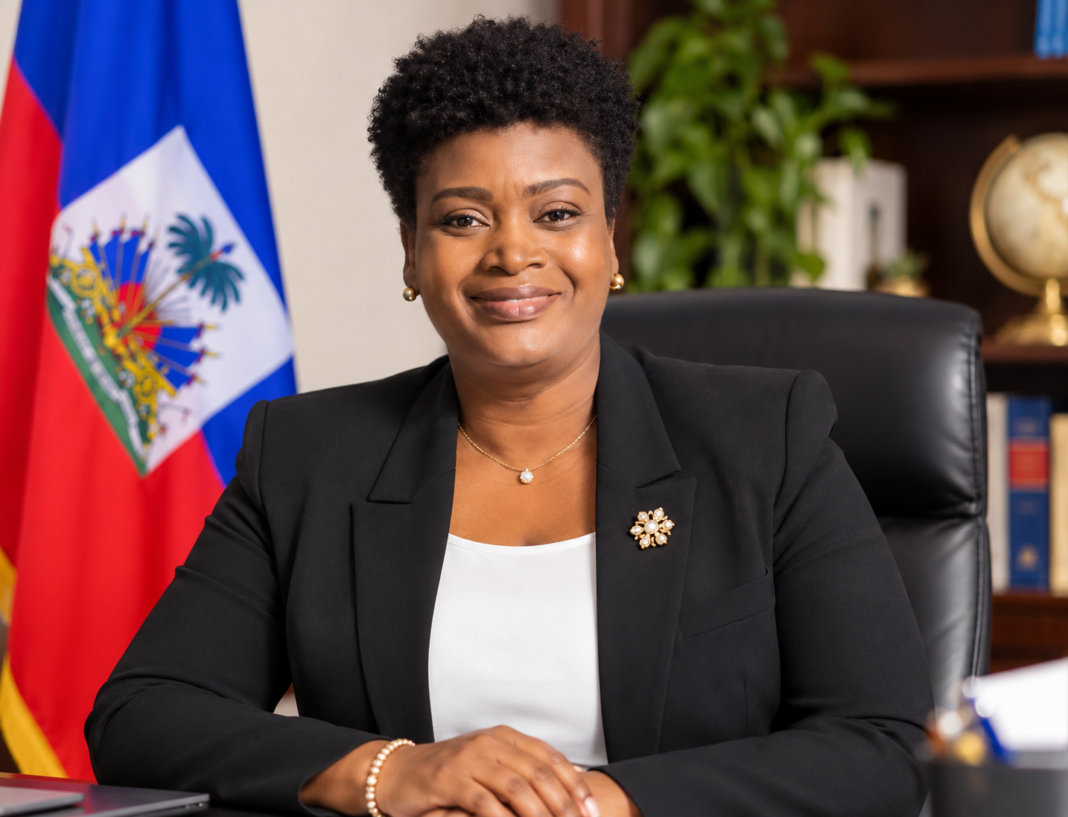

New ULCC Director General Goethie Varnelle Morency Promises Stronger Investigations, Greater Confidentiality and a More Effective Fight Against Corruption
By The Haitian Tribune Staff | October 10, 2026
PORT-AU-PRINCE, HAITI — Haiti’s Anti-Corruption Unit (ULCC) is entering a new phase under the leadership of its recently appointed Director General, Goethie Varnelle Morency, who has announced an ambitious reform agenda aimed at restoring the institution’s credibility, strengthening investigations, and improving its effectiveness in combating corruption.
Morency says her administration intends to establish a more disciplined and professional approach to investigating allegations of corruption while ensuring that all individuals, regardless of their political influence or social standing, are treated fairly under the law.
Her vision centers on transforming the ULCC into a more credible and results-oriented institution, capable of conducting thorough investigations without political interference, unnecessary publicity, or violations of individual rights.
The new director general believes the agency must become a trusted national authority in the fight against corruption, particularly at a time when public confidence in Haiti’s institutions remains fragile.
A Quieter but More Effective Anti-Corruption Agency
One of Morency’s central priorities is changing how the ULCC conducts and communicates its investigations.
In recent years, several high-profile corruption investigations have attracted considerable public attention, sometimes before investigators completed their work or judicial authorities reviewed the evidence.
Morency argues that excessive publicity surrounding ongoing investigations can compromise sensitive information, damage reputations, and potentially undermine legal proceedings.
Under her leadership, the agency intends to place greater emphasis on confidentiality, professionalism, and procedural safeguards.
Rather than making frequent public announcements about allegations or preliminary findings, the ULCC will prioritize the development of comprehensive investigative files supported by credible evidence.
The objective, according to Morency, is to create an institution that generates fewer headlines but delivers stronger results.
She emphasized that investigators must work without prejudice and maintain the impartiality necessary to preserve public confidence in the agency.
The new approach signals a shift from highly publicized investigations toward evidence-based cases capable of withstanding judicial scrutiny.
Strengthening Investigations and Respecting Due Process
Morency also wants to reinforce the legal foundations of the ULCC’s investigative work.
She stressed that the agency is responsible for preventing, detecting, and investigating corruption, but it does not possess the authority to determine criminal guilt.
That responsibility belongs to Haiti’s judicial system.
The distinction is particularly important in a country where allegations of corruption frequently become the subject of political controversy and public speculation.
Under the proposed reforms, investigators will be expected to gather evidence systematically, document their findings carefully, and prepare cases that meet applicable legal standards.
Morency believes that poorly documented investigations risk being dismissed or challenged during judicial proceedings, weakening the overall fight against corruption.
Her administration therefore intends to improve investigative procedures and strengthen internal oversight to ensure that cases submitted to judicial authorities are legally sound.
The approach also emphasizes respect for the presumption of innocence and the rights of individuals under investigation.
No Political Protection or Selective Investigations
The new director general has also responded to concerns that her appointment could lead to the suspension or weakening of sensitive corruption investigations.
Some critics have questioned whether changes in leadership might affect cases involving politically influential individuals or former government officials.
Morency rejected suggestions that she intends to protect certain personalities or interfere with ongoing investigations.
She pointed to her professional background and personal commitment to public service as evidence of her determination to uphold the agency’s responsibilities.
According to Morency, investigations must proceed without discrimination and remain strictly within the legal authority granted to the ULCC.
She also emphasized the importance of establishing institutional safeguards to prevent conflicts of interest, favoritism, and decisions motivated by personal or political considerations.
Her position is that the ULCC must operate independently and consistently, regardless of the identities of those involved in corruption allegations.
However, she acknowledged that the agency cannot exceed its legal powers and must respect the responsibilities of other institutions, particularly the courts.
New Investigative Methods and Corruption Risk Assessments
Beyond responding to formal complaints and allegations, Morency intends to broaden the ULCC’s ability to identify potential corruption.
Traditionally, complaints and denunciations have served as important sources of information for the agency.
The new administration wants to complement those mechanisms with more proactive methods of identifying corruption risks within public institutions.
This approach would involve evaluating government sectors and administrative procedures that may be particularly vulnerable to fraud, bribery, misappropriation of public resources, and abuse of authority.
By identifying weaknesses before they develop into major scandals, the ULCC hopes to strengthen its preventive role.
Such assessments could also help investigators determine where additional oversight and monitoring are necessary.
The strategy reflects Morency’s belief that fighting corruption requires more than investigating wrongdoing after it occurs.
It also requires identifying the institutional conditions that allow corruption to flourish.
A Three-Year Reform Plan and a Ten-Year Strategic Vision
Morency has announced significant changes to the ULCC’s internal governance structure.
Her administration has developed a new three-year operational plan alongside a broader ten-year strategic framework intended to guide the institution’s long-term development.
The three-year plan is expected to focus on immediate institutional priorities, including investigative efficiency, administrative improvements, and stronger internal procedures.
The ten-year strategy is designed to provide continuity and establish a more sustainable approach to anti-corruption efforts.
Morency also intends to involve other public institutions and civil society organizations in shaping the agency’s future direction.
She said recommendations from government stakeholders, independent organizations, and civil society representatives will be considered and incorporated into the strategic planning process.
The initiative is intended to encourage broader participation in institutional reform while reinforcing the ULCC’s role in promoting transparency and accountability.
Stronger Cooperation With Haiti’s Financial Inspectorate
Another major component of the reform agenda involves continued cooperation between the ULCC and Haiti’s General Inspectorate of Finance (IGF).
The two institutions are expected to maintain their collaboration through an interagency task force focused on identifying financial irregularities and strengthening oversight of public resources.
The IGF conducts technical, financial, and administrative audits of public institutions throughout Haiti.
These audits can reveal irregularities in government spending, weaknesses in financial management, and potential violations of administrative procedures.
Morency believes that findings from IGF audits could provide valuable information for the ULCC when determining whether formal corruption investigations are warranted.
By improving the exchange of information between the two institutions, the government could strengthen its capacity to detect financial misconduct and pursue appropriate legal action.
However, audit findings alone do not necessarily establish criminal wrongdoing. Investigators must still determine whether the evidence supports allegations of corruption under Haitian law.
The collaboration is intended to create a more coordinated system of financial oversight and accountability.
Analysis: Can Institutional Reform Restore Public Confidence?
Morency’s reform agenda comes at a critical moment for Haiti, where political instability, institutional weaknesses, and longstanding allegations of corruption have contributed to declining public trust.
For years, anti-corruption efforts have faced significant obstacles, including limited institutional resources, political pressure, delays in judicial proceedings, and questions surrounding the enforcement of accountability measures.
The ULCC has played an important role in investigating alleged misconduct involving public officials and government institutions.
Nevertheless, the effectiveness of anti-corruption efforts cannot be measured solely by the number of investigations launched or reports released.
A credible system also requires independent judicial institutions capable of reviewing evidence, conducting fair proceedings, and imposing penalties when wrongdoing is established.
Morency’s emphasis on confidentiality and due process could strengthen the quality of investigations and protect sensitive evidence.
However, reducing public communication also presents challenges.
The ULCC must strike a careful balance between protecting confidential investigations and maintaining sufficient transparency to reassure citizens that politically sensitive cases are being pursued.
Excessive secrecy could create suspicion, particularly if the public receives little information about the progress or eventual outcome of major investigations.
One potential solution would be to publish periodic institutional reports containing statistical information about investigations, referrals to judicial authorities, and completed cases without disclosing confidential evidence.
Such measures could help the agency demonstrate accountability while respecting investigative procedures.
The proposed ten-year strategy also raises important questions about institutional continuity.
Haiti has experienced repeated changes in political leadership and government administration, making long-term reform difficult to sustain.
For Morency’s initiative to succeed, the ULCC will need sufficient resources, qualified personnel, institutional independence, and consistent cooperation from the judicial system.
A Defining Test for the New Leadership
The appointment of Goethie Varnelle Morency marks an opportunity to reassess the ULCC’s methods and strengthen its role in Haiti’s institutional framework.
Her emphasis on professional investigations, confidentiality, legal safeguards, and long-term planning represents a proposed departure from practices that have sometimes placed greater attention on public allegations than judicial outcomes.
Yet the ultimate success of these reforms will depend on their implementation.
Haitians will be watching to determine whether the agency can investigate allegations involving powerful individuals without favoritism, produce credible evidence, and contribute to meaningful judicial accountability.
The coming months will also reveal whether the ULCC can translate its strategic plans into measurable institutional improvements.
For Haiti, the challenge extends beyond exposing corruption. It involves building institutions capable of preventing misconduct, protecting public resources, and ensuring that no individual is placed above the law.
Morency’s leadership will ultimately be judged by whether her promise of a quieter, more professional, and more effective anti-corruption agency produces lasting results.
The Haitian Tribune | Politics & Governance | October 11, 2026