
The 23-year-old rookie delivered two spectacular throws to the plate against San Diego, including a 103.9 mph strike that was reportedly the fastest by an MLB fielder this season
QUEENS, New York — New York Mets rookie Carson Benge is quickly developing a reputation for possessing one of the most dangerous throwing arms in Major League Baseball. The 23-year-old right fielder put that talent on full display Monday night at Citi Field, throwing out two San Diego Padres runners at home plate in the first inning and helping the Mets escape early trouble on their way to a 2-1 victory. Benge’s defensive performance was particularly impressive because the former pitcher combined exceptional velocity with the accuracy needed to turn potential Padres runs into outs.
Two Throws Change the First Inning
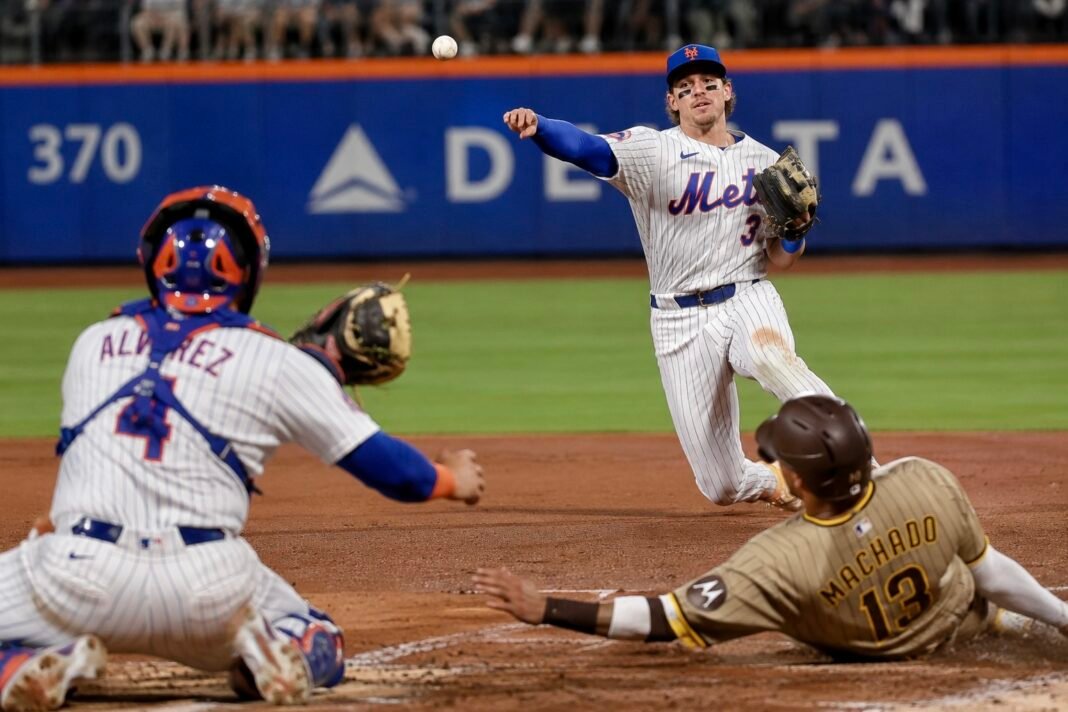
Mets starter Nolan McLean encountered immediate trouble after allowing consecutive singles to Jake Cronenworth and Manny Machado with one out. When Ty France dropped a single into the right-center-field gap, Benge quickly collected the ball and fired home. His throw reportedly reached 99.9 mph, arriving on one hop and giving the Mets enough time to retire Cronenworth at the plate. Moments later, Benge produced an even more impressive defensive play. Jackson Merrill drove a hard ball into right field, and Benge responded with a 103.9 mph throw to home plate, where catcher Francisco Alvarez completed the tag on Machado.
According to MLB tracking cited in reports, the 103.9 mph throw was the fastest recorded by any major-league fielder this season, surpassing Jac Caglianone’s previous mark of 102.7 mph. Benge said afterward that he has always considered arm strength and accuracy important parts of his game, but acknowledged that recording an out with a throw of that velocity made the moment even more memorable.
Pitching Background Paying Off
Benge’s arm strength should not come as a complete surprise. His background as a pitcher helped establish expectations that he could eventually develop an above-average outfield arm. What has attracted attention since his arrival, however, is how efficiently he has converted that ability into outs.
The two plays against San Diego represented his third and fourth outfield assists over a span of only 13 innings, after he also caught Washington Nationals runners attempting to advance during Mets victories over the weekend. Benge now has nine outfield assists this season, placing him second in the National League behind Los Angeles Dodgers outfielder Andy Pages.
Interim Mets manager Andy Green described Benge as an exceptional athlete and praised his ability to consistently turn throwing opportunities into outs. Mets president of baseball operations David Stearns has similarly expressed confidence in the rookie’s defensive ability, describing him as a gifted player capable of making an impact offensively and defensively.
AJ Ewing Joins the Defensive Show
Benge wasn’t the only Mets rookie outfielder preventing San Diego from scoring. In the second inning, left fielder AJ Ewing threw out Xander Bogaerts at home plate, ending another dangerous Padres scoring opportunity. The three plays produced an unusual piece of baseball history. According to SNY, the Mets became the first team since at least 1920 to record three outfield assists at home plate during the first two innings of a game.
Those defensive plays proved crucial.
McLean struggled early, allowing seven consecutive batters to reach base after recording the first out of the game. San Diego collected four straight singles in the first inning before beginning the second with two walks and a hit batter. Yet the Padres managed only one run during that stretch, largely because the Mets’ young outfield repeatedly erased runners at home.
Defense Allows McLean to Recover
With his outfielders limiting the damage, McLean eventually settled into the game. The rookie starter completed six innings on 103 pitches, allowing one run on six hits and four walks while recording three strikeouts. Without Benge and Ewing’s defensive contributions, the early innings could have unfolded very differently. McLean acknowledged afterward that the outfield assists not only prevented runs for the Mets but also kept additional runs off his individual pitching line. Green went even further, crediting the young corner outfielders with allowing McLean to recover and pitch six innings.
Mets Score Early and Hold On
New York produced all the offense it needed in the bottom of the first inning. Ewing opened the game with a single before moving to second when Francisco Lindor drew a walk. Bo Bichette then drove Ewing home, recording the 500th RBI of his major-league career. Luis Robert Jr. followed with a sacrifice fly that brought Lindor home and gave New York its second run. Padres starter Walker Buehler settled down after the opening inning and allowed only two hits over six innings, but San Diego could not overcome the early deficit.
Benge Is Becoming a Defensive Threat
For opposing teams, Benge’s emergence could eventually change how aggressively runners challenge the Mets’ right fielder. Elite outfield defense is not determined by throwing velocity alone. Accuracy, positioning, decision-making, and the ability to quickly transfer the baseball are equally important. So far, Benge has demonstrated all of them.
His pitching background may have provided the raw arm strength, but his early work in the Mets outfield suggests that he is learning how to turn that strength into a legitimate defensive weapon. Monday’s performance offered perhaps the strongest evidence yet. On a night when New York scored only twice, and its starting pitcher struggled early, Carson Benge’s right arm effectively became part of the Mets’ pitching staff and helped save the game.
The Haitian Tribune | Sports