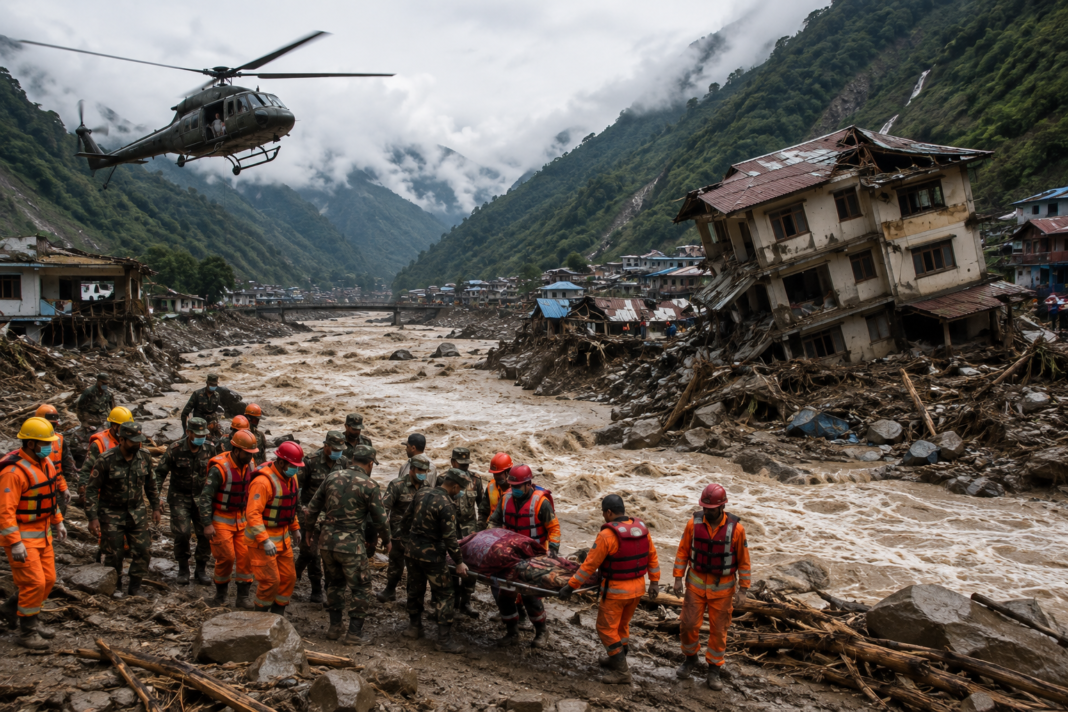
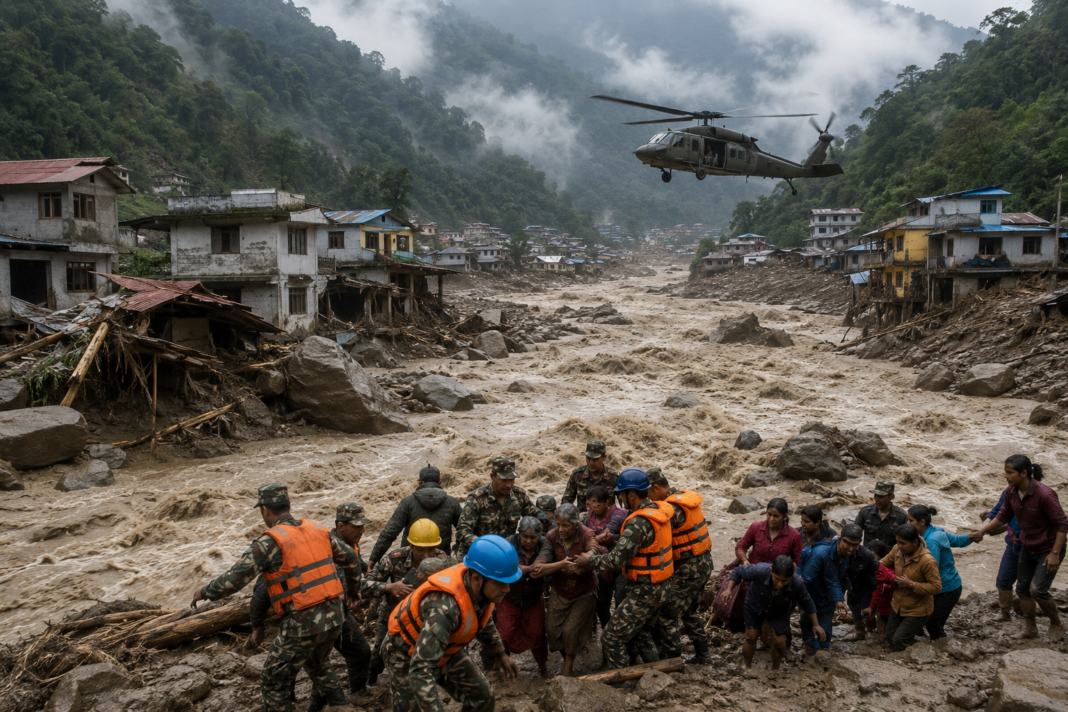

Rescue crews and military helicopters race to reach devastated Himalayan communities after a massive surge of water and mud swept away homes, roads and bridges
DEVIGHAT, Nepal — A catastrophic flood along the mountainous border between Nepal and China has killed more than 390 people and left over 1,400 others missing, according to authorities cited by the Associated Press, as emergency teams continue searching devastated communities across the Himalayan region.
The disaster struck after a glacier collapse triggered a powerful rush of water, mud and debris through valleys and settlements in Nepal and Tibet. The force of the flooding destroyed buildings, damaged bridges and roads, buried vehicles and forced hundreds of residents from their homes.
Rescue operations continued Thursday, with military helicopters and emergency crews attempting to reach isolated areas where transportation and communication links have been severely disrupted.
Communities Overwhelmed Within Minutes
Videos from the affected region captured the extraordinary speed of the disaster, showing residents running for safety as a massive wall of muddy water advanced through populated areas.
Some buildings were engulfed almost immediately, while bridges and other infrastructure were swept away.
Nepal’s Nuwakot district was among the areas reported to have suffered extensive damage. Images from affected communities showed streets and riverbanks covered by thick layers of mud, vehicles partially buried and debris caught in trees and utility lines.
The scale of destruction has complicated efforts to determine the full number of casualties.
Authorities in Nepal and China have reported more than 390 deaths combined, while over 1,400 people remain unaccounted for. The missing reportedly include foreign visitors and pilgrims who were traveling through the Himalayan region.
With search operations still underway, officials fear the casualty figures could rise.
Difficult Terrain Complicates Rescue Efforts
The geography of the Himalayas presents a major challenge for emergency responders. Mountain roads are often narrow and vulnerable to landslides, while damaged bridges can leave entire communities inaccessible by ground.
Helicopters have therefore become critical for transporting rescue personnel, locating survivors and delivering emergency assistance.
Hundreds of people have also been displaced, creating an urgent need for temporary shelter, clean drinking water, food and medical care.
The destruction of roads and communications infrastructure could make humanitarian operations increasingly difficult, particularly in remote mountain communities.
Glacier Disaster Raises Climate Concerns
The catastrophe is also renewing concerns about the vulnerability of Himalayan communities as glaciers retreat and temperatures rise.
Scientists have warned for years that climate change is transforming the Himalayan environment. Rising temperatures can accelerate glacier melting and contribute to the expansion or destabilization of glacial lakes.
When natural barriers containing those lakes collapse, enormous quantities of water can suddenly rush downstream in what scientists call a glacial lake outburst flood, potentially destroying communities with little warning.
However, determining precisely how climate change contributed to an individual disaster requires detailed scientific analysis. Investigators will need to examine the glacier collapse and other conditions that produced this week’s deadly flooding.
A Disaster Spanning Borders
The tragedy highlights the shared environmental risks facing countries across the Himalayan region.
Floodwaters, glaciers and river systems do not follow political boundaries, meaning a major event originating in one mountainous area can quickly threaten communities across national borders.
That reality could increase pressure on governments to strengthen cross-border monitoring of glaciers, improve early-warning systems and develop evacuation plans for vulnerable settlements.
For now, the immediate priority remains finding survivors.
As rescue teams continue searching damaged villages and remote valleys, families across Nepal and Tibet are waiting for information about relatives who remain missing.
With more than 1,400 people still unaccounted for, the full human toll of the catastrophe may not be known for days.
The Haitian Tribune | World News