
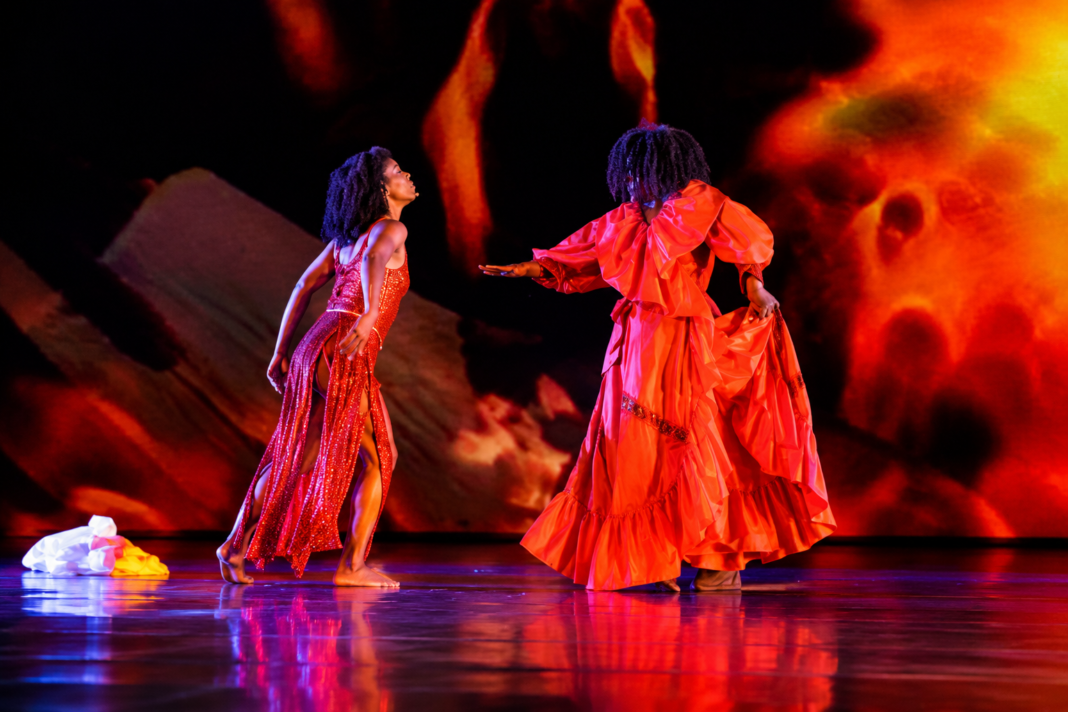

The ambitious production transformed the Adrienne Arsht Center into a celebration of Haitian history, music, dance, spirituality and identity
MIAMI — Haiti’s cultural heritage took center stage in Miami on August 15 as Ayiti Bèl Nanm delivered an ambitious theatrical celebration of the country’s history, creativity and enduring spirit at the Ziff Ballet Opera House at the Adrienne Arsht Center for the Performing Arts.
More than simply a concert or theatrical presentation, Ayiti Bèl Nanm brought together music, dance, acting, poetry, visual art, costumes, and historical storytelling to present a multidimensional portrait of Haiti. The production’s message was unmistakable: Haiti cannot be defined solely by the crises that dominate international headlines. Behind those struggles exists a nation with a profound cultural inheritance, centuries of history, and an artistic tradition that continues to reinvent itself. For approximately 90 minutes, the audience was invited into that Haiti.
Haiti Told Through Art
From the opening scenes, Ayiti Bèl Nanm established itself as something different from a conventional cultural showcase. Rather than moving from one independent performance to another, the production connected its artistic elements into a broader theatrical journey. History blended with imagination. Music interacted with movement. Spiritual traditions shared the stage with historical memory, while poetry, dramatic performance and visual imagery helped connect Haiti’s ancestral past with its contemporary identity.
The result was a portrait of a country simultaneously looking backward and forward. That approach allowed the production to celebrate Haiti without ignoring the complexity of its history. The emphasis was instead placed on the forces that have sustained generations of Haitians: memory, creativity, resistance, spirituality, and community.
Generations of Haitian Talent Share the Stage
A major strength of the production was the range of performers assembled for the occasion. Under the stage direction of Florence Jean-Louis Dupuy and artistic direction of Paula Clermont Péant, established Haitian artists appeared alongside performers representing a younger generation. The cast included Danielle Thermidor, Farah Juste, Paula Clermont Péant, Erol Josué, Florence Jean-Louis Dupuy, Wood Hyppolite, Jimmy Jean-Louis, Élisabeth Guérin, Tafa Mi-Soleil, Riva Nyri Précil, Linda Isabelle François Obas, Béatrice Kebreau, Lindsay Lederer and Katile Fuertes. Rather than functioning simply as individual performers, members of the ensemble helped embody different dimensions of Haiti’s collective experience.
Historical personalities, ancestral voices, spirituality and symbolic characters emerged throughout the performance, allowing the production to explore Haitian identity through human stories rather than through a straightforward history lesson. The presence of younger artists such as Katile Fuertes was particularly meaningful within that framework. It reinforced one of the production’s underlying themes: cultural heritage survives when it is transmitted to another generation.
Dance Becomes Part of the Story
Movement played an equally important role. Under the choreography and direction of Linda François Obas, dance functioned as a narrative language rather than simply an accompaniment to the music. Traditional Haitian influences appeared alongside contemporary movement, allowing the choreography to communicate emotion, struggle and celebration without depending entirely on dialogue.
At various moments, the dancers seemed to carry the story forward themselves. That integration of movement into the dramatic structure helped give Ayiti Bèl Nanm its theatrical character. Music, dance, and acting were not presented as separate disciplines; they worked together to create a unified experience.
An Original Musical World
Music formed another foundation of the production. The creative team promoted Raoul Denis Jr., Yenny Ferdinand, Jaël Auguste, Mushy Widmaier, and Fabrice Rouzier as the “Sonic Architects of ABN,” bringing together musicians with extensive experience across Haitian musical traditions. Composer Raoul Denis Jr. created the original score, AYITI YUKA YEKE ATABEY, specifically for the production.
The score helped connect the different scenes and emotional transitions while establishing a musical identity that was recognizably Haitian without being confined to one genre or period. The contributions of Ferdinand, Auguste, Widmaier and Rouzier added further depth to that musical landscape. With musicians performing live, the relationship between instruments, voices, dancers and actors became one of the production’s strongest elements. The music did not simply accompany the story. It helped tell it.
A Striking Visual Presentation
The production was equally impressive visually. Digital imagery and scenic projections created by Maksaens Denis transformed the stage as the narrative progressed, providing changing environments without distracting from the performers. The projections worked particularly well because they complemented rather than dominated the action. Costume designer Maëlle Figaro David added another important layer. The costumes communicated character, history, and symbolism through their shapes, textures, and colors. In several scenes, clothing itself became part of the visual storytelling. Combined with lighting, choreography and digital scenery, the designs gave Ayiti Bèl Nanm an identity that felt polished, contemporary and distinctly Haitian.
Professionalism Extended Beyond the Stage
The attention devoted to the production was visible before the first performance began. Its promotional campaign had already established a sophisticated visual identity, and that same aesthetic carried into the theater. Even the souvenir program distributed to attendees reflected the larger artistic concept through carefully coordinated photography, graphic design, and typography. These details may appear secondary to what happens onstage, but together they demonstrate the organizational ambition behind the project. The branding, technical production, staging, and audience experience all appeared connected to the same creative vision. That consistency helped Ayiti Bèl Nanm feel less like an isolated cultural event and more like a fully developed theatrical production prepared for a major international venue.
Showing Another Haiti
Perhaps the production’s greatest accomplishment was the image of Haiti it placed before the audience. Haiti is frequently introduced to international audiences through political instability, insecurity, poverty and humanitarian emergencies. Those realities cannot be dismissed. But they are not the entirety of Haiti. Ayiti Bèl Nanm offered another perspective: Haiti as a civilization of artists, musicians, dancers, storytellers and creators; Haiti as a country carrying Indigenous, African and Caribbean influences; Haiti as a place where spirituality, resistance and artistic expression have remained intertwined for generations. That distinction matters, particularly at a moment when so much of the international conversation about Haiti centers on crisis. For one evening in Miami, Haitian artists controlled the narrative.
Could Ayiti Bèl Nanm Travel Beyond Miami?
Following the performance, attention naturally turned toward what might come next. A production with this scale and concept appears capable of reaching audiences well beyond South Florida, particularly in cities with significant Haitian communities such as New York and Montreal. But its potential audience does not necessarily end with the Haitian diaspora. The themes at the center of Ayiti Bèl Nanm– identity, migration, memory, ancestry, resistance, spirituality, and belonging- extend beyond nationality. That universality could give the production opportunities to introduce Haitian culture to audiences who may have little previous familiarity with the country beyond news headlines. A touring version would also give Haitian theater and multidisciplinary performance greater visibility on international stages.
A Vision Brought to Life
Such a large production requires more than talented performers. It requires someone to assemble those talents around a common idea. Recognition therefore belongs to Production BELAYITI and Carole Demesmin Arty, whose vision helped bring together the performers, musicians, dancers, designers, technicians, and creative professionals responsible for the production. Their accomplishment was not simply putting another Haitian cultural event onstage. They helped create a space in which Haitian artists could present their country through their own imagination and artistic vocabulary. That may ultimately be the most important legacy of the Miami performance.
Haiti’s Beautiful Soul Has More Stories to Tell
By the final curtain, Ayiti Bèl Nanm had accomplished something difficult. It celebrated Haiti without reducing the country to nostalgia. It honored tradition while embracing contemporary theatrical techniques. And it presented cultural pride without requiring audiences to ignore the challenges Haiti continues to face. Instead, it argued through art that Haiti’s difficulties and Haiti’s beauty can exist within the same national story. The performance at the Adrienne Arsht Center demonstrated what Haitian artists can accomplish when music, theater, dance, technology, and visual design are brought together with a clear creative purpose.
Miami witnessed that vision on August 15. The next chapter could be New York, Montreal, or another international stage. Because if Ayiti Bèl Nanm delivered one message above all others, it was this:
Haiti’s beautiful soul cannot be confined by borders, and its story is far from finished.
The Haitian Tribune | Arts & Culture