
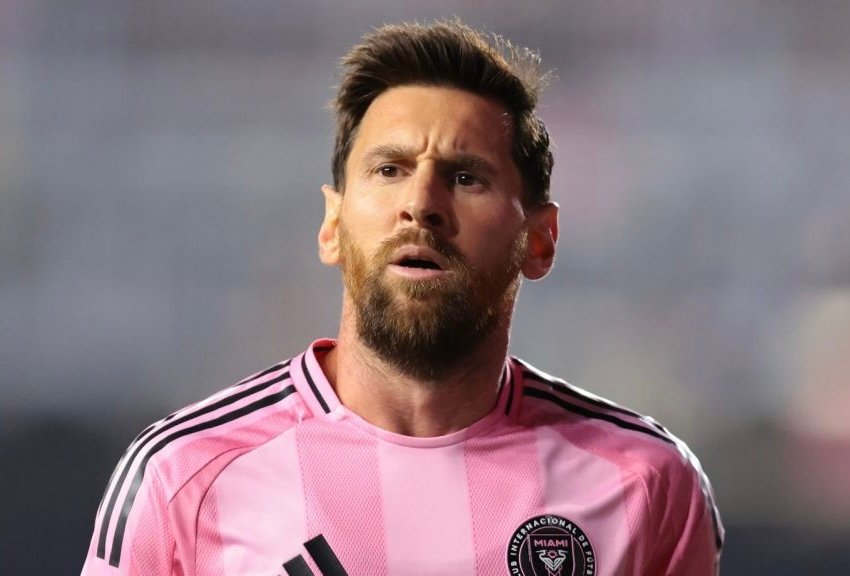

For nearly two decades, one argument has divided soccer fans more than almost any other: Who is the greatest player of all time — Lionel Messi or Cristiano Ronaldo?
The debate has traveled from stadiums and television studios to neighborhood soccer fields, barbershops, social media and living rooms around the world. Supporters of Cristiano Ronaldo point to his extraordinary scoring record, physical dominance, longevity and success across several European leagues. Lionel Messi’s supporters counter with his unmatched creativity, record eight Ballon d’Or awards, enormous trophy collection and the achievement that transformed the debate for many fans, winning the 2022 FIFA World Cup with Argentina.
Even in 2026, after both superstars have moved beyond their European primes, the argument remains very much alive.
The statistics tell part of the story. The trophies tell another. But understanding why Messi and Ronaldo became the defining players of their generation requires looking beyond a single number.
Ronaldo: The Ultimate Goal-Scoring Machine
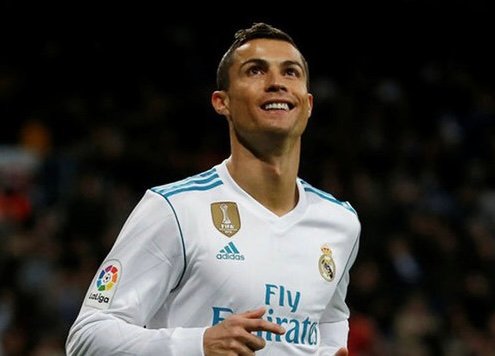
If the argument begins with goals, Ronaldo has one of the strongest cases in soccer history.
The Portuguese superstar has built an unprecedented scoring career spanning Sporting CP, Manchester United, Real Madrid, Juventus and Al Nassr, in addition to his extraordinary record for Portugal.
Ronaldo remains the all-time leading scorer in men’s international soccer. Earlier in 2026, ESPN listed him with 143 goals for Portugal and 969 official senior career goals overall as he continued his pursuit of the almost unimaginable milestone of 1,000 career goals.
That longevity is one of the foundations of Ronaldo’s GOAT argument.
He began his career as an explosive winger known for speed, stepovers, and individual skill. Over time, he transformed himself into one of the most efficient finishers soccer has ever produced.
His right foot, left foot, heading ability, penalty-area movement and aerial strength made him dangerous in virtually every attacking situation.
Ronaldo’s greatest club years came at Real Madrid, where his scoring reached extraordinary levels. He became synonymous with the Champions League and remains the competition’s historic benchmark for goalscoring.
UEFA records show that Ronaldo won the Champions League five times, once with Manchester United and four times with Real Madrid — compared with Messi’s four titles with Barcelona. Ronaldo was also the Champions League’s top scorer in seven seasons, compared with six for Messi.
For supporters of Ronaldo, that record on European soccer’s biggest club stage is difficult to overlook.
Messi: More Than a Goalscorer
Messi’s case begins with scoring but extends far beyond it.
The Argentine combined elite goalscoring with the qualities of a world-class playmaker. At his peak, Messi could dictate a match from midfield, dribble through multiple defenders, create opportunities for teammates, and finish attacks himself.
His 2011-12 campaign remains one of the most remarkable individual seasons ever produced by a soccer player. Messi scored 73 goals in all competitions for Barcelona that season.
But evaluating Messi solely through goals misses much of what made him exceptional.
His close control, acceleration, passing vision, and ability to operate in crowded spaces allowed him to influence matches in ways that traditional strikers could not. He could function as a winger, false nine, attacking midfielder, creator, and finisher, sometimes during the same match.
His individual honors reflect that influence.
Messi has won a record eight Ballon d’Or awards, compared with Ronaldo’s five. He also holds six European Golden Shoes, while Ronaldo won four.
Two Different Roads to Greatness
One of Ronaldo’s strongest arguments is that he proved himself in several major soccer environments.
He won three Premier League titles with Manchester United, two La Liga championships with Real Madrid, and two Serie A titles with Juventus.
Ronaldo adapted to different countries, coaches, tactical systems, and styles of play.
Messi’s European career followed a different path.
His identity became inseparable from Barcelona, where he developed through La Masia and became the central figure in one of the greatest eras in club history.
Messi won 10 La Liga titles, seven Copa del Rey trophies and four Champions League championships with Barcelona. After leaving Spain, he added two Ligue 1 championships with Paris Saint-Germain.
He then moved to the United States in 2023 and transformed Inter Miami’s competitive profile and international visibility.
By 2026, Inter Miami credited Messi with helping the club win the 2023 Leagues Cup, 2024 Supporters’ Shield, and 2025 MLS Cup. He also won the 2025 MLS Golden Boot with 29 regular-season goals and became the first player to win consecutive MLS MVP awards.
The International Debate Changed in 2022
For years, international success was used against Messi. Ronaldo had helped Portugal win UEFA Euro 2016 and later the 2019 UEFA Nations League. Portugal added another Nations League title in 2025.
Messi’s international career, however, underwent a dramatic transformation.
Argentina captured the 2021 Copa América, giving Messi his first senior major international championship. Argentina followed that achievement by winning the 2022 Finalissima.
Then came Qatar.
At the 2022 FIFA World Cup, Messi delivered the trophy Argentina had pursued since Diego Maradona’s team won it in 1986.
Messi scored twice in the unforgettable final against France and converted his penalty in the shootout as Argentina became world champions.
He subsequently helped Argentina win another Copa América in 2024.
That World Cup dramatically strengthened Messi’s claim to GOAT status because it filled the most obvious gap in his résumé.
Ronaldo, despite his extraordinary international career, never won the World Cup. His final World Cup appearance came in 2026, when Portugal was eliminated by Spain. FIFA reported afterward that Ronaldo confirmed he did not intend to play in another World Cup.
Even 2026 Added Another Chapter
Remarkably, the Messi-Ronaldo story remained relevant at the 2026 World Cup.
At 39, Messi produced another extraordinary tournament. Reuters reported that he scored eight goals and supplied four assists as Argentina returned to the World Cup final, where it lost 1-0 to Spain after extra time.
Ronaldo, now 41, continues his club career with Al Nassr and remains within striking distance of 1,000 official career goals — a milestone that would further strengthen his reputation as perhaps the greatest goalscorer the sport has seen.
The fact that both men remained relevant on the world’s biggest stages well into their late 30s and early 40s is itself extraordinary.
Comparing Their Greatest Strengths
The two legends achieved greatness differently.
Ronaldo’s strongest arguments are his enormous career goal total, Champions League record, aerial ability, athleticism, longevity, international scoring record and demonstrated ability to dominate in England, Spain and Italy.
Messi’s strongest arguments are his eight Ballon d’Or awards, superior playmaking influence, dribbling ability, combination of scoring and assists, larger overall team trophy collection and, most importantly, a World Cup championship.
Inter Miami described Messi in 2026 as having accumulated 46 team trophies, making him the most decorated player in soccer history by the club’s count. Yet Ronaldo’s career contains a statistical achievement Messi does not possess: the men’s international goals record and a career scoring total approaching four figures.
Statistics Cannot Completely Settle the Debate
Comparing Messi and Ronaldo is difficult because soccer cannot be reduced to goals alone. If the question is simply who scored more, Ronaldo holds the advantage. If the question is who combined elite goalscoring with passing, dribbling and playmaking at the highest level, Messi has an especially powerful argument.
If success across different European leagues is given greater weight, Ronaldo’s résumé becomes stronger.
If the World Cup, Ballon d’Or awards, and total team trophies are considered decisive, the balance shifts toward Messi. Their physical profiles were also fundamentally different. Ronaldo built himself into a prototype modern athlete: powerful, fast, explosive in the air, and capable of reinventing his game as he aged.
Messi relied more heavily on balance, anticipation, close control, vision, and extraordinary technical precision. One overwhelmed defenses with physical and scoring dominance. The other often seemed capable of manipulating an entire match with the ball at his feet.
So, Who Is the GOAT?
There may never be a universally accepted answer.
Cristiano Ronaldo has a legitimate claim as the greatest goalscorer and one of the most complete attacking athletes soccer has ever produced. Lionel Messi has perhaps the strongest overall claim to being the greatest footballer, particularly when goals, creativity, individual awards, team trophies and the World Cup are considered together.
Messi’s 2022 World Cup victory arguably gave him the one achievement that had long been missing from his case. His record eight Ballon d’Or awards and enormous trophy collection further strengthen that position.
But declaring Messi the GOAT does not diminish Ronaldo.
Ronaldo’s career is almost without precedent. To remain a prolific scorer into his 40s, become men’s international soccer’s record scorer, win five Champions League titles and succeed in three of Europe’s strongest domestic leagues represents a level of longevity and adaptability unlikely to be repeated soon.
Perhaps that is the greatest legacy of their rivalry.
For nearly two decades, Messi and Ronaldo forced each other — and soccer itself — toward standards that once seemed impossible. Seasons of 50 and 60 goals became almost expected. Champions League records repeatedly fell. Ballon d’Or ceremonies became battles between two familiar names.
Fans may continue arguing over who deserves the title of GOAT.
History, however, may remember something even more remarkable: soccer had Lionel Messi and Cristiano Ronaldo at the same time.