
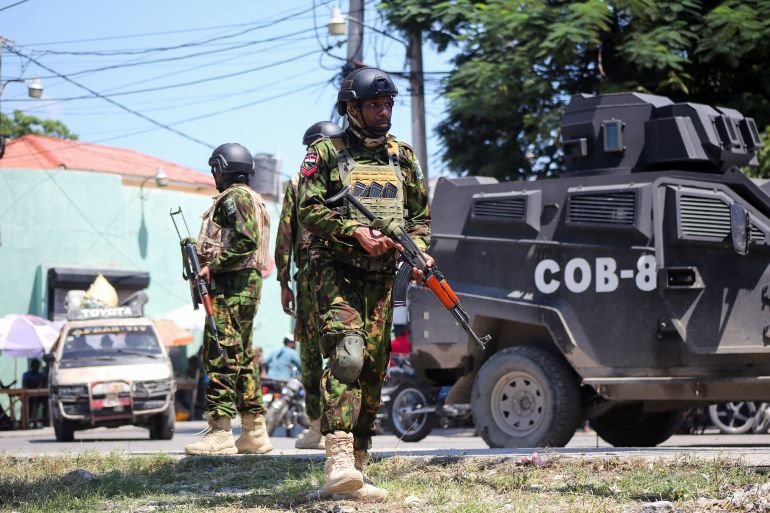
United Nations – The United Nations Security Council has approved the creation of a new Gang Suppression Force (GSF) for Haiti, a stronger replacement for the Kenya-led Multinational Security Support (MSS) mission that struggled to curb violence. The decision, backed by a vote of 12 in favor with abstentions from Russia, China, and Pakistan, authorizes the new force for a 12-month mandate.
The GSF will be supported by a newly established U.N. Support Office and the Organization of American States (OAS). According to the resolution, the force will deploy up to 5,550 members—including 5,500 military and police personnel and 50 civilians. Its goal is to reinforce Haiti’s national police and armed forces, secure conditions for free elections, and guarantee safe humanitarian access.
A Call from Haiti’s Leaders
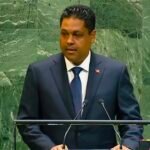
During last week’s U.N. General Assembly, Laurent Saint-Cyr, president of Haiti’s Transitional Presidential Council, urged world leaders to act decisively: “Today, the international community must stand alongside Haiti and take large-scale measures, not half steps.” He highlighted the devastating toll of gang violence, which has displaced more than 1.3 million people and destabilized health services.
Haiti has been without elections since 2016, and without an elected president since Jovenel Moïse’s assassination in July 2021. Restoring order, Saint-Cyr emphasized, remains the country’s greatest challenge.
From Kenyan Mission to GSF
Since the first Kenyan police units arrived 15 months ago, armed groups have tightened their control over Port-au-Prince—now estimated at 90%—and spread into northern regions. Limited resources and a lack of coordination hindered the MSS’s effectiveness, even as it attempted to stabilize neighborhoods.
The United States and other nations argued that a larger, more independent mission was essential. Denmark also pushed for language in the resolution to protect women and children from exploitation, recruitment, and sexual violence by gangs.
Challenges Ahead
The GSF will be overseen by a coalition of troop-contributing nations and a civilian special representative to coordinate political direction. However, financing remains uncertain. U.N. Secretary-General António Guterres has proposed a “dual-track strategy,” combining support for Haitian authorities with robust enforcement measures, but without traditional U.N. peacekeepers.
Meanwhile, the situation on the ground continues to worsen. This year alone, more than 3,000 Haitians have been killed by gang violence, entire neighborhoods destroyed, and armed civilian “self-defense” groups have emerged in response. Gangs have even resorted to using weaponized drones in attacks.
The Gang Suppression Force represents the most ambitious international effort in years to restore stability. Its success will depend on coordination, funding, and the ability of diverse forces to operate effectively in one of the world’s most volatile environments.