
The former president still commands a loyal following, but international sanctions, allegations of gang ties and questions over electoral eligibility make a second presidency far from certain
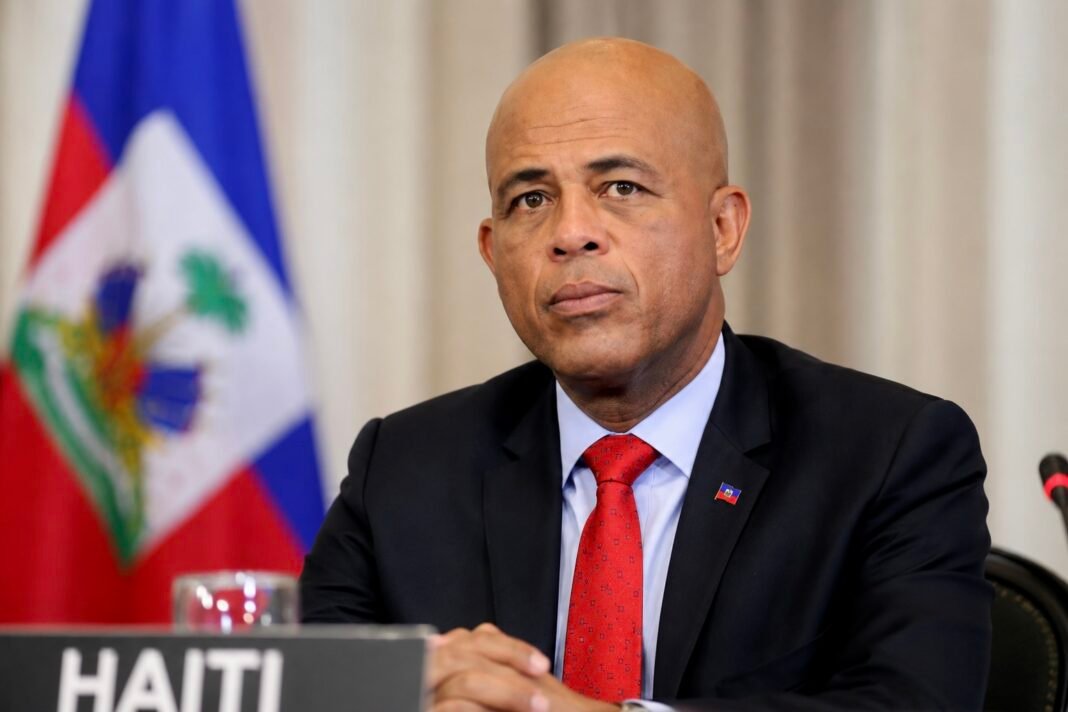
PORT-AU-PRINCE, Haiti — Few Haitian political figures generate the combination of loyalty, controversy and uncertainty that surrounds former President Michel Martelly. Ten years after leaving the National Palace, the former musician known as “Sweet Micky” remains a recognizable political force—and speculation about a possible return to power has never completely disappeared.
Martelly’s rare return to Haiti on July 15, 2026, demonstrated that he has not vanished from the country’s political imagination. Supporters gathered to welcome him, offering visible evidence that the former president continues to command loyalty despite years of allegations and international sanctions.
But popularity among a segment of the electorate is only one part of the equation.
The larger question is whether Martelly could actually transform that remaining support into a viable presidential candidacy—and ultimately a second term.
Constitutionally, a Second Term Is Possible
The first distinction is important: Haiti’s Constitution does not automatically prohibit Martelly from serving as president again.
Article 134-3 provides that a former president may serve one additional term after being out of office for at least five years, while prohibiting a third term. Martelly served from 2011 to 2016, meaning the constitutional waiting period itself would not prevent another presidential bid.
However, constitutional eligibility involves much more than the two-term limitation.
Article 135 establishes additional requirements, including the enjoyment of civil and political rights, residency conditions and obtaining a décharge—or discharge—for the management of public funds when applicable. Those requirements could become politically and legally significant in any attempt by Martelly to return to the ballot.
That means the real battle might begin long before Haitians cast their votes.
The Sanctions Are a Major Obstacle
Martelly’s greatest political liability is the extraordinary weight of the allegations made against him internationally.
In August 2024, the U.S. Treasury Department imposed sanctions on the former president under an executive order targeting people involved in the international illicit drug trade.
The Treasury alleged that Martelly abused his influence to facilitate cocaine trafficking, laundered illicit proceeds, worked with Haitian drug traffickers and sponsored multiple Haiti-based gangs. The sanctions restrict certain financial transactions involving him.
These are official U.S. government allegations, but sanctions should not be confused with a criminal conviction.
Martelly had previously been sanctioned by Canada in 2022, and additional international measures have further complicated his standing. Recent reporting also notes allegations by Haiti’s Anti-Corruption Unit concerning his asset declarations.
That distinction matters journalistically and legally: Martelly has faced serious accusations from foreign governments and Haitian institutions, but those accusations do not themselves constitute a criminal conviction in a Haitian court.
Alleged Gang Connections Could Be His Greatest Political Burden
Perhaps no issue would be more damaging in today’s Haiti than allegations of connections between political leaders and armed gangs.
Haiti’s gang crisis has devastated communities, displaced families and weakened the authority of the state. Any politician seeking the presidency will inevitably face questions about his or her past relationships with armed groups.
The allegations surrounding Martelly are particularly serious because the U.S. Treasury did not merely accuse him of corruption. It specifically alleged that he sponsored multiple gangs operating in Haiti.
More broadly, research by the U.S. Congressional Research Service has documented longstanding relationships between some Haitian political and economic elites and armed groups, describing how gangs have historically been used for political intimidation, demonstrations and other forms of influence.
For Martelly, therefore, a future campaign would almost certainly become a referendum not only on his presidency but also on the political system that developed before Haiti’s present security catastrophe.
Yet Martelly Still Has Something Many Politicians Do Not: A Base
This is where the political calculation becomes more complicated.
International condemnation does not necessarily eliminate domestic political support.
Martelly remains one of Haiti’s most recognizable public figures. His decades-long music career gave him a national identity before he entered politics, and his presidency created a political network that extended well beyond his own administration.
His political movement, PHTK, became one of the country’s most influential political organizations during the years following his election.
The enthusiastic reception from some supporters during his July return showed that sanctions and controversy have not completely destroyed that constituency.
That should not automatically be interpreted as evidence that Martelly could win a national election. A crowd welcoming a former president is not an opinion poll, and Haiti’s political environment has changed dramatically since 2011.
Still, it demonstrates something politically important: Martelly retains the ability to attract attention.
And in a fragmented political environment, name recognition matters.
His Opponents Could Also Be Divided
Another factor potentially working in Martelly’s favor is the fragmentation of Haitian politics.
A candidate does not necessarily need overwhelming national popularity to become competitive when opposition votes are divided among numerous parties and personalities.
Martelly himself demonstrated this dynamic during his first rise to power. He successfully transformed celebrity, populist messaging and dissatisfaction with traditional political figures into an electoral movement.
A similar strategy today could attempt to portray him as a strong executive capable of restoring order.
But recreating 2011 would be extremely difficult.
Haiti today is dealing with a far deeper security crisis, weakened institutions, mass displacement and widespread distrust of the country’s political class. Martelly would also enter the race carrying considerably more political baggage than he did during his first campaign.
His Record Would Become the Campaign
If Martelly attempted a comeback, the election would almost certainly become a national debate over his legacy.
His supporters could point to infrastructure projects, tourism initiatives, social programs and the relative level of state authority that existed during his presidency compared with today’s conditions.
His opponents would focus on corruption allegations, governance controversies, the evolution of PHTK-era politics and accusations concerning relationships between political elites and armed groups.
The central campaign question could therefore become:
Was Haiti better governed under Martelly—or did the political system of that period help create conditions that contributed to today’s crisis?
Those competing interpretations would likely dominate any Martelly candidacy.
International Acceptance Would Be Another Challenge
Even if Martelly could overcome domestic electoral obstacles, governing would present another problem.
A Haitian president must interact with Washington, Canada, the European Union, international financial institutions, Caribbean governments and other partners.
A president facing sanctions from major international partners could encounter significant diplomatic and financial complications.
That would not necessarily determine how Haitians vote. Haiti is a sovereign country, and foreign governments do not choose its president.
But international isolation could affect a government’s ability to obtain financing, attract investment, negotiate assistance and coordinate security cooperation.
A Martelly campaign would therefore have to answer not only whether he could win, but whether he could effectively govern while carrying such international restrictions.
Could Martelly Actually Win?
At this stage, calling Martelly either a future president or a politically finished figure would go beyond the available evidence.
There are arguments on both sides.
He has national name recognition, political experience, loyal supporters and a proven ability to mobilize voters. His return to Haiti demonstrated that a constituency for him still exists.
Against those advantages stand formidable obstacles: U.S. and Canadian sanctions, allegations involving gangs and narcotics trafficking, scrutiny of his financial record, possible disputes over constitutional eligibility requirements and a dramatically changed Haitian electorate.
There is also another significant fact: recent reporting indicates that PHTK did not register a candidate for the upcoming general elections.
That makes talk of an immediate Martelly candidacy highly speculative unless the electoral landscape changes.
The Bigger Question Is What Haitians Want Next
Martelly’s political future ultimately represents a larger question facing Haiti.
After years without nationally elected leadership and amid an unprecedented security crisis, will voters seek familiar political figures whom they associate with a more stable period?
Or will they conclude that Haiti needs an entirely new generation of leadership disconnected from the political establishment of the past two decades?
Martelly may still have supporters. His name still carries political weight. And his return demonstrated that he retains the ability to command public attention.
But having a political base is very different from having a clear path back to the National Palace.
If Michel Martelly seriously attempts a second presidential run, his campaign would likely become one of the most consequential—and controversial—tests of Haiti’s post-crisis democracy.
For voters, the question would extend far beyond whether they still like “Sweet Micky.”
It would be whether they believe Michel Martelly represents a return to stability—or a return to the political system they want Haiti to leave behind.
The Haitian Tribune | Political Analysis