
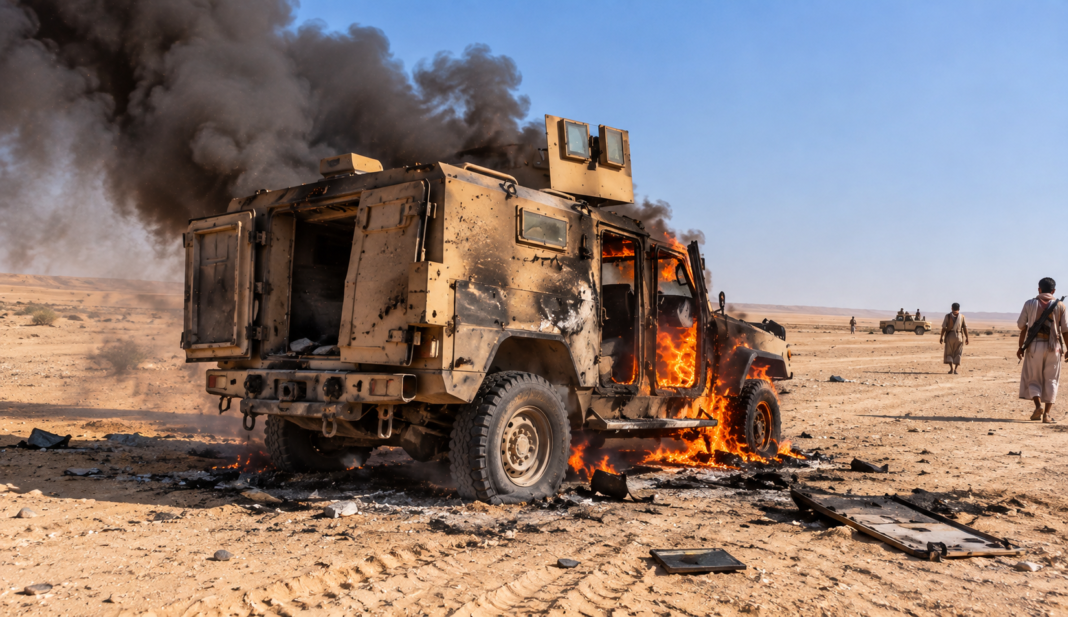

Military chiefs from Saudi Arabia, Türkiye and Pakistan are preparing for urgent consultations under a new collective-defense agreement as fighting in Yemen and attacks on the kingdom raise fears of a wider regional confrontation.
Saudi Arabia is turning increasingly to regional and international partners as Yemen’s Houthi movement escalates missile and drone attacks against the kingdom, threatening cities, energy infrastructure and strategically important Red Sea shipping routes.
Military chiefs from Saudi Arabia, Türkiye and Pakistan are expected to hold urgent discussions on how the three countries should coordinate their response under the Mecca Joint Defence Agreement, signed in August. The pact provides that an attack against one member is to be treated as an attack against all three.
The consultations come after another wave of Houthi attacks Thursday. Saudi Arabia’s coalition in Yemen said its air defenses intercepted six ballistic missiles aimed at Taif in western Saudi Arabia and the Yanbu region on the Red Sea. The Houthis separately claimed attacks against a sensitive target in Riyadh and facilities belonging to Saudi Aramco in Yanbu.
The competing statements from the Houthis and Saudi authorities could not independently establish the full extent of the attacks or damage.
Security Alerts Across Western Saudi Arabia
The latest escalation has prompted heightened security precautions across parts of the kingdom.
Saudi authorities have issued alerts in areas including Mecca, Jeddah and Yanbu, reflecting concern that missiles or drones could threaten heavily populated areas and important infrastructure. Yanbu is especially significant because it is a major Red Sea energy hub and an alternative export route for Saudi oil.
The danger extends beyond Saudi territory. Renewed warfare in Yemen has increased concerns about navigation through the Bab el-Mandeb, the narrow waterway connecting the Red Sea with the Gulf of Aden.
Disruption there, combined with instability affecting shipping through the Strait of Hormuz, poses broader risks to international energy markets and maritime trade.
Saudi Religious Leader Issues Forceful Appeal
The military escalation has also produced unusually strong language from Saudi Arabia’s highest religious authority.
Saudi Grand Mufti Sheikh Saleh bin Humaid called on the kingdom’s soldiers to be prepared to sacrifice their lives in fighting the Houthis until the movement is removed from power, according to a statement carried by Saudi state media.
The statement illustrates the seriousness with which Saudi authorities are portraying the renewed confrontation.
The Houthis, who control much of northern Yemen including the capital Sanaa, have expanded military operations during the broader regional conflict. The movement has long received support from Iran, although the degree of Tehran’s operational control over individual Houthi decisions remains disputed.
Türkiye and Pakistan Move Closer to Riyadh
The developing crisis is also testing the three-way defense arrangement between Riyadh, Ankara and Islamabad.
Türkiye has already indicated that it is prepared to help meet Saudi military requirements under the agreement. Turkish Foreign Minister Hakan Fidan said Ankara could provide technical military assistance while emphasizing that the pact was not intended to replace Türkiye’s existing alliances.
Pakistan has also been involved in diplomatic efforts surrounding the confrontation. Earlier this month, Pakistani officials conveyed a Saudi warning to Iran urging Tehran to restrain its Houthi allies after attacks on Saudi cities and energy facilities intensified.
On September 22, the foreign ministers of Saudi Arabia, Türkiye, Pakistan and Egypt jointly affirmed Riyadh’s right to defend itself under international law. At the same time, they called for dialogue and diplomacy and stressed the importance of protecting maritime navigation.
That combination — strengthening Saudi defenses while publicly supporting diplomacy — demonstrates the difficult balance facing Riyadh’s partners as they seek to deter additional attacks without accelerating the regional conflict.
Iran Seeks Distance From Escalation
Iran’s role remains one of the most sensitive elements of the crisis.
Tehran has historically supported the Houthis, but Iranian officials have also sought to emphasize that the Yemeni movement makes its own decisions.
President Masoud Pezeshkian has recently signaled interest in negotiations aimed at ending the broader confrontation between Iran and the United States, saying Tehran remains prepared to pursue an agreement with Washington.
Those diplomatic signals come as the Houthis continue military operations against Saudi Arabia, creating an increasingly complicated situation for Tehran: maintaining relations with a regional ally while attempting to avoid further escalation with neighboring states.
Other Countries Step Up Defensive Support
Saudi Arabia is receiving assistance beyond its new trilateral partnership.
Britain has agreed to provide defensive air-to-air refueling support after a request from Riyadh, including the deployment of a Voyager tanker aircraft for a limited period.
France has also been discussing assistance related to the protection of Saudi energy infrastructure, particularly around Yanbu, as concern grows over the vulnerability of oil facilities to repeated drone and missile attacks.
These measures demonstrate how the Yemen conflict is becoming intertwined with a much broader regional security crisis.
Yemen War Returns to the Center of Regional Politics
The renewed confrontation represents a sharp reversal from the relative reduction in hostilities that followed earlier diplomatic efforts between Saudi Arabia and the Houthis.
The movement has recently expanded operations in Yemen, including around strategically important territory linked to the Red Sea coast and the Bab el-Mandeb. Fighting has displaced more than 100,000 people and caused heavy casualties, according to reporting based on United Nations figures.
The humanitarian consequences could worsen if the conflict continues expanding.
For Saudi Arabia, the immediate objective is increasingly focused on protecting its population, military installations and energy network while preventing Houthi advances in Yemen from threatening Red Sea navigation.
For Türkiye and Pakistan, the crisis represents the first major test of what their newly established collective-defense arrangement with Riyadh means in practice.
And for the wider Middle East, the danger is that a confrontation once largely contained inside Yemen could become another major front in an already expanding regional war.
With missiles and drones again crossing the Saudi-Yemeni frontier and some of the world’s most important energy routes under pressure, the next decisions by Riyadh and its allies could determine whether the conflict remains primarily defensive — or develops into a substantially wider military confrontation.
By The Haitian Tribune Staff | September 25, 2026 | RIYADH