
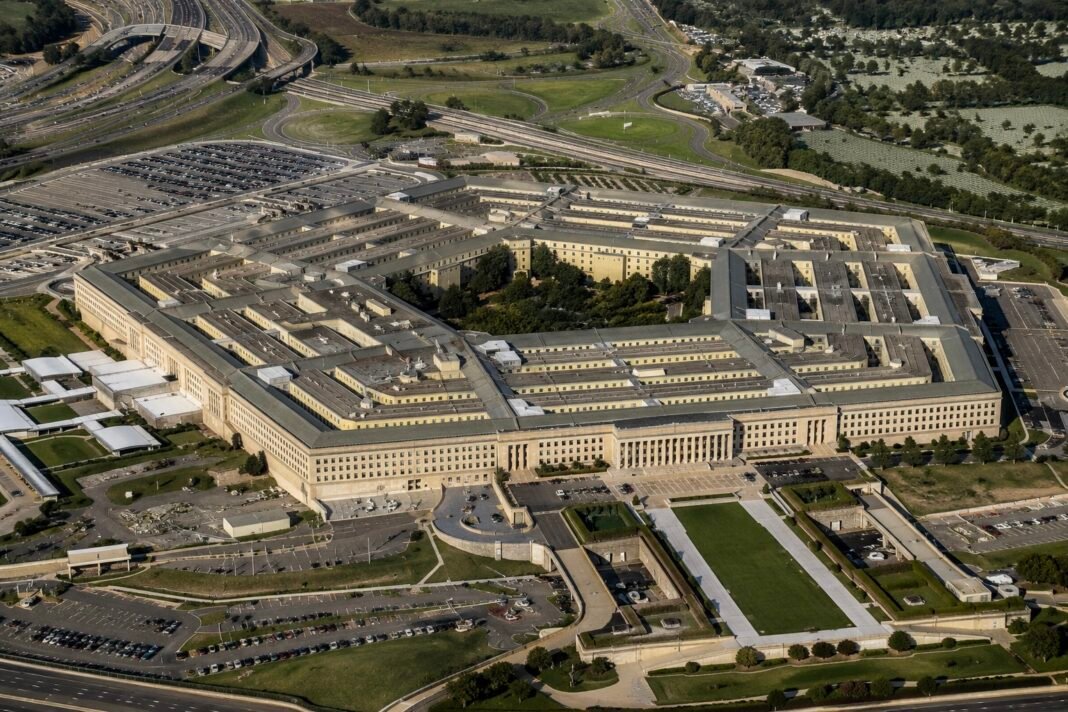

Defense Department demands audits of partnerships involving entities linked to China, Russia, and Iran as Washington tightens safeguards around sensitive American research
WASHINGTON — The Pentagon has ordered 30 U.S. academic institutions to conduct extensive reviews of their research partnerships and financial relationships with certain foreign organizations, warning that universities that fail to address potential national-security concerns could lose access to future federal research funding.
The Defense Department announced Monday that the institutions must examine international collaborations involving organizations the federal government has identified as potential security risks. The review also covers relationships involving organizations connected to former or restructured Confucius Institute programs.
The Pentagon did not publicly identify the 30 universities and other academic institutions affected by the directive. Under the order, institutions have until August 31 to report their findings to the Defense Department and explain what corrective measures they have taken when necessary.
Pentagon Demands Review of Sensitive Research
The audits are intended to determine whether foreign partnerships may have resulted in sensitive information, including technology subject to U.S. export controls, being improperly disclosed or made accessible. Universities will also be expected to evaluate whether certain collaborations should be modified or terminated.
Emil Michael, the Pentagon’s senior research and engineering official, said institutions receiving taxpayer-funded research grants are expected to maintain strict safeguards protecting national security. The department’s position reflects growing concern in Washington that America’s open academic research environment can provide foreign governments with access to scientific and technological advances that may eventually have military applications.
China, Russia and Iran Organizations Under Scrutiny
The reviews center partly on foreign organizations identified under Section 1286 of the 2019 National Defense Authorization Act, which established a framework allowing the Defense Department to identify foreign institutions considered potential risks to U.S. research security. The Pentagon’s fiscal 2025 list includes approximately 130 organizations connected to China, Russia and Iran. The organizations span a broad range of scientific and technical fields, including research centers, laboratories, and institutions involved in advanced technology.
The rules are also becoming more restrictive. Beginning in fiscal year 2026, the Defense Department is prohibited from funding certain fundamental research projects involving partnerships with organizations appearing on the Pentagon’s restricted list. That prohibition can cover direct research collaboration, shared equipment, and work involving individuals employed by designated institutions. For American universities dependent on federal research grants, the financial consequences could therefore be significant.
Growing Concern Over China’s Access to U.S. Technology
The latest directive comes amid broader efforts by Washington to prevent American research and technology from strengthening foreign military capabilities, particularly those of China. U.S. officials have increasingly focused on emerging technologies such as artificial intelligence, advanced computing, semiconductors, and other dual-use technologies that have both civilian and military applications. The central concern is that research produced through American universities or companies could ultimately be incorporated into foreign defense programs.
That challenge is complicated by the international nature of modern scientific research. American universities routinely collaborate with researchers and institutions around the world, and foreign students and scholars make substantial contributions to U.S. science and technology. The policy debate therefore involves balancing two competing priorities: protecting sensitive research while preserving the international cooperation that has historically helped American universities remain global leaders in science.
Confucius Institute Connections Also Included
The Pentagon’s review also extends to organizations associated with former Confucius Institutes. China began establishing the institutes internationally in the early 2000s to promote Mandarin-language education and Chinese culture. Many operated through partnerships with foreign universities and received financial support linked to Chinese educational authorities.
At their peak, hundreds operated around the world, including numerous programs at American colleges and universities. They later became politically controversial in the United States as lawmakers and national security officials raised questions about academic independence, transparency, and Chinese government influence. Congress subsequently imposed restrictions affecting federal funding for institutions maintaining certain Confucius Institute relationships.
Most U.S. programs eventually closed. However, a 2023 federal watchdog review found that while universities frequently replaced the institutes with university-run language departments, U.S.-supported programs or partnerships involving Taiwan, some continued relationships with Chinese organizations that had previously supported Confucius Institute activities. The Pentagon now wants institutions covered by its directive to determine whether those successor relationships create security concerns.
Universities Face an August 31 Deadline
The relatively short deadline places pressure on the affected institutions to examine potentially complex international relationships. Universities may need to review research agreements, financial arrangements, visiting-scholar programs, laboratory access, equipment-sharing agreements, and other forms of cooperation. Where problematic relationships are identified, institutions will be expected to explain how the risks are being addressed. In some cases, that could mean ending collaborations altogether. Failure to satisfy Pentagon research-security requirements could jeopardize an institution’s eligibility for future Defense Department research funding.
A Broader Shift in American Research Policy
The directive illustrates how national-security competition is increasingly reaching beyond military installations and defense contractors and into American university laboratories. Universities have traditionally benefited from extensive international collaboration, particularly in basic scientific research where discoveries are often openly published. But technologies that begin as civilian academic research can sometimes have significant military applications.
That has pushed Washington toward tighter oversight of who participates in federally supported research, which foreign institutions American researchers work with, and how sensitive technologies are shared. The challenge will be implementing those safeguards without unnecessarily restricting legitimate scientific collaboration or treating international researchers broadly as security threats. For the 30 institutions now under Pentagon scrutiny, however, the immediate requirement is clear: review their foreign relationships, identify potential vulnerabilities and demonstrate by August 31 that federally funded American research is adequately protected.
The Haitian Tribune | U.S. News